
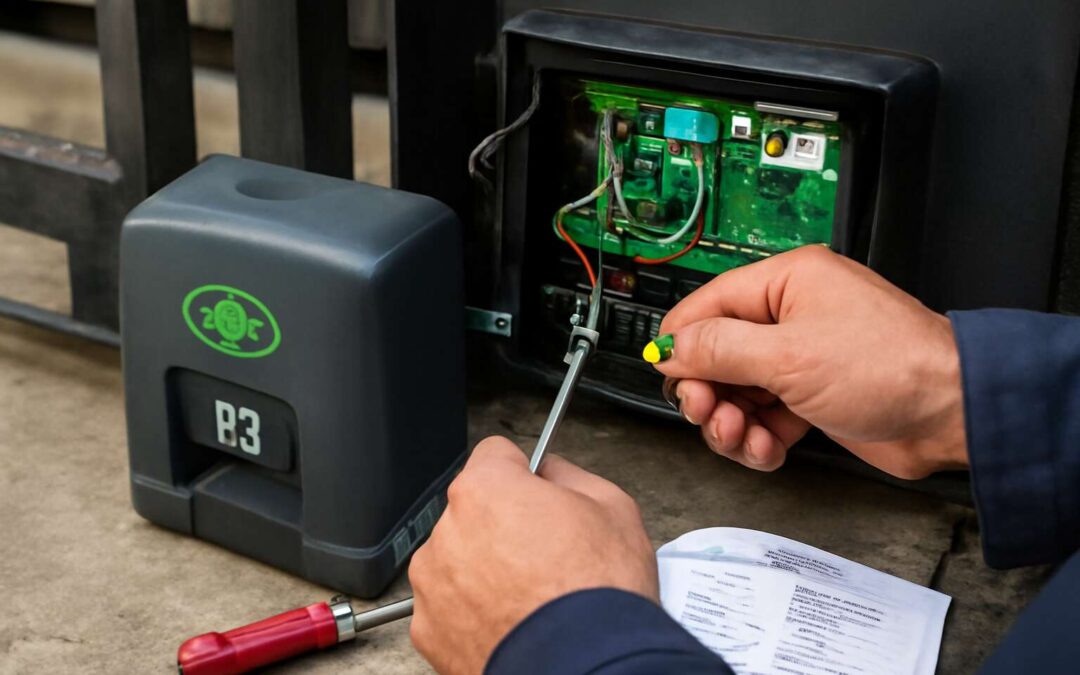
Centurion D5 Gate Motor Troubleshooting Guide
Safety Setup and Reset
Across South Africa, a dependable gate is more than metal—it is a harbor of certainty. A field pulse of insights suggests that more than half of centurion d5 gate motor manual troubleshooting issues trace back to setup and reset quirks, not worn gears.
Safety first, always. Power is isolated, and the work area is kept clear of curious fingers. A careful, unhurried approach keeps the rhythm of the gate intact and avoids unnecessary drama!
- Power isolation and safe testing mindset
- Sensor and beam considerations for reliable reads
- Reference to the manual’s reset philosophy rather than shortcuts
When the moment calls for a reset, centurion d5 gate motor manual troubleshooting becomes a quiet compass rather than a frantic scramble. Rely on the manual, on clear observations, and on patience to guide the system back toward harmony.
Power Wiring and Overrides
Across South Africa, a dependable gate is the quiet punctuation of daily life, and a striking majority of centurion d5 gate motor manual troubleshooting cases hinge on power wiring quirks rather than worn gears. I listen for the gate’s soft hum and the patient calm of overrides that hold the moment steady. When power paths align, the rhythm returns and drama fades into safe certainty.
Power wiring and overrides tell the true story of reliability. I seek signals that are clear, not hurried, and I trust the manual’s quiet philosophy to keep observations precise. Overrides become a compass when the main narrative falters, guiding us toward harmony without panic.
- Power path integrity
- Connector condition
- Override safety alignment
Sensor, Position, and Safety Edge
Sensor, Position, and Safety Edge hold the drive of a Centurion D5 in a delicate balance of trust and torque. In centurion d5 gate motor manual troubleshooting, the sensor suite acts as a patient sentry, reading light, heat, and shadows to decide the gate’s next move. Field technicians note that sensor faults drive a sizable share of service calls, turning smooth entrances into tense rituals.
Their world is subtle: small misalignments, fingerprints on a lens, or glare can flip a measurement from confident to uncertain. Position feedback—via limit switches or encoders—maps the gate’s journey, and when the reading drifts, the motion may stall or surge, as if guided by a wavering compass. The Safety Edge remains a quiet guardian, ready to halt at the first hint of obstruction and preserve the quiet rhythm.
Signals to watch for include:
- beam misreads or intermittent triggers
- shifting stop position during cycles
- edge sensitivity changes with temperature
Control System and Diagnostics
Control systems bite back with a quiet clock that governs every pivot of the Centurion D5. In centurion d5 gate motor manual troubleshooting, the diagnostic map reveals trust and tremor: code streams, timing margins, and power-rail stability whispering intent. A seasoned technician learns to read the cues—the relay hum when logic falters, the timer edge tightening under load, the firmware chatter hinting at aging components.
Diagnostics drift into focus, revealing the circuit’s mood without overt drama. The control system keeps its counsel in blinking codes and ripples of current, inviting the technician to listen beyond the fault message. Only then does the flow of data become intelligible.
- Controller status lights and blink codes
- Encoder or limit switch feedback drift
- Power rail transients and watchdog timer activity
This is the quiet calculus of access control, where precision matters more than bravado.