
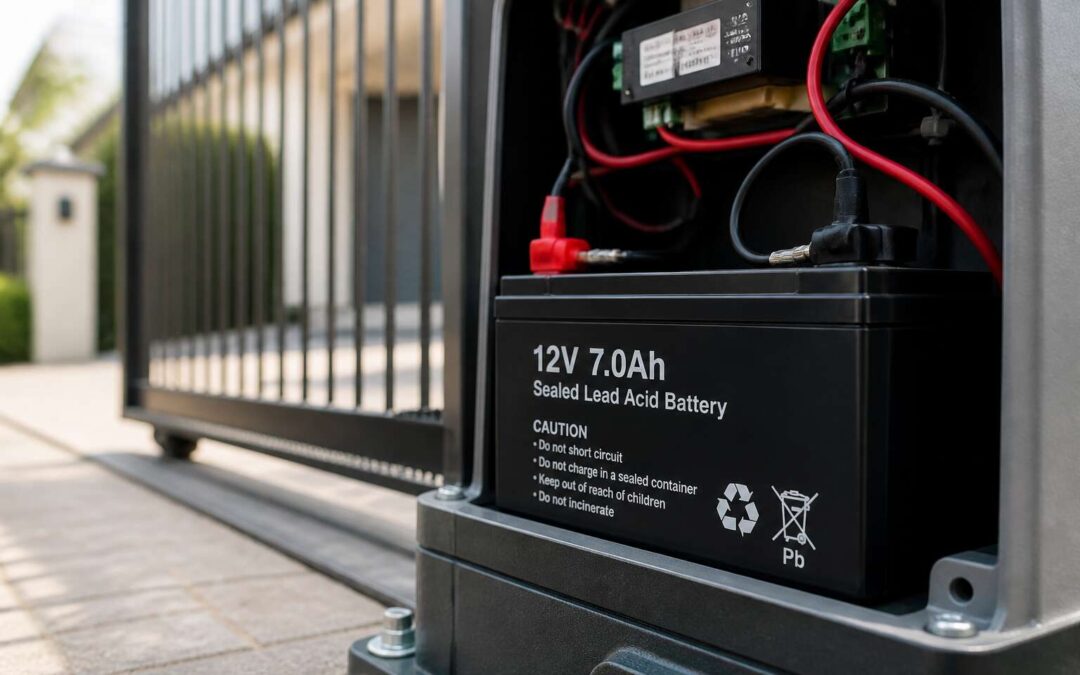
Understanding Gate Motor Batteries
Types of Gate Motor Batteries
Every gate motor system eventually falls silent, often at the most inconvenient moment. The average 12V backup battery lasts between 12 and 24 months, depending on usage cycles and weather exposure. When that silence hits, the immediate reflex is to search for a gate motor battery near me. This is not just about purchasing a replacement. It is about understanding the energy source that powers your daily entrance and exit.
The choice of battery determines how consistently your gate operates during load shedding. Sealed lead acid batteries remain the standard for many installations. They handle deep discharges reasonably well, but they degrade faster in high heat. Gel batteries offer a slower discharge rate and tolerate extreme temperatures better. Lithium options cost more upfront, yet they provide a longer lifespan and a lighter footprint. For South African conditions, considering your specific climate and power outage frequency matters more than the brand name.
How Gate Motor Batteries Work
Standby power involves a quiet compromise. The battery rests in a float charge state, receiving a steady trickle from the charger. When the grid fails, it shifts to discharge mode without a pause. The motor draws a surge of current to move the gate leaf, and the battery must deliver that instantly. A worn unit sags under the load, and suddenly nothing moves!
- The gate controller receives a command from the remote or keypad.
- The controller energises the motor circuit using battery power.
- The battery discharges across the motor terminals to turn the geared mechanism.
- The charger replenishes the stored energy once the mains supply returns.
Every open and close cycle counts against the battery’s total lifespan. Deep discharges from frequent load shedding accelerate chemical wear inside the plates. Understanding this rhythm helps you evaluate whether a gate motor battery near me will serve your outage pattern. A clear picture of the working sequence supports a smarter purchase.
Signs Your Battery Needs Replacement
A gate motor battery near me rarely dies without warning. The first clue is a delayed gate. You press the remote, and the gate hesitates before sliding open. A healthy battery delivers power instantly. A dying one struggles to reach the motor.
Heat accelerates plate corrosion in South African summers. If the battery casing feels warm or swollen, the internal structure is breaking down. Charge indicators matter too. A green light suggests health. A flashing amber light means the battery cannot hold its rated voltage. Common warning signs include:
- The gate moves noticeably slower than usual.
- The remote works up close but fails at a distance.
- The gate stops mid-cycle, then resumes slowly.
These symptoms point to a cell losing capacity. Test the old unit before searching for a gate motor battery near me. Measure resting voltage. It should read around 12.6 volts. Below 12.4 means the battery is struggling!
Factors to Consider When Choosing a Battery
Voltage and Capacity
Two hundred and fifty milliamps of standby draw, typical for a modern gate motor, can silently drain a wrong-sized battery. Voltage should match your motor’s spec exactly. Most South African installations use 12V or 24V systems, but do not assume. Check the motor housing or manual. A 12V motor won’t tolerate a 24V supply, and the reverse means sluggish operation and premature failure.
Capacity is about endurance. This determines how many open and close cycles you get before the grid drops. A higher amp-hour rating provides more autonomy. Think about load shedding schedules in your area. Consider the weight of your gate, too; a heavy steel gate pulls more current per cycle.
– Standards for gates are 7Ah, 12Ah, and 24Ah units.
– A 7Ah battery offers limited cycles, roughly 10 to 15.
– A 24Ah unit can push past 40 cycles on a single charge.
The physical size of the battery compartment limits your choice. You might need a deep-cycle battery for frequent outages, which handles deeper discharges without damage. Your search for a “gate motor battery near me” should include weighing these factors against your daily usage. A domestic property with a single gate and a stable power supply runs fine on a smaller capacity. A busy complex or an estate with rolling blackouts demands the larger reserve.
Compatibility with Your Motor
Beyond the basics, compatibility with your motor comes down to the physical connector and the charging method. A battery can have perfect ratings but fail because the terminal posts are 2 millimetres too far apart. When you search for “gate motor battery near me”, take a photo of your old battery; the terminal shape tells a story.
The motor’s charge controller is not universal. Some units use a constant voltage algorithm designed for flat top posts. Others expect a taper charge for loop posts. Installing the wrong chemistry, like a lithium cell in a float controller, causes overheating. That is a real and present danger!
Weigh up these compatibility elements:
- Terminal style (tab, bolt, or ring)
- Charging voltage tolerance of your motor
- Sensitivity to high pulse loads
Brand vs. Generic
Seventy percent of gate motor failures trace back to the battery, yet most owners choose on price alone. In my years replacing units across Gauteng, I have watched generic cells die within six months while branded ones endure three winters. The difference is not cosmetic; it is metallurgical.
Consider the internal plate composition. Generic batteries often use thinner lead plates to cut costs. Under the high pulse load of a gate motor, those plates warp and sulfate. A branded unit with proper calcium alloy handles the strain without that decay.
- Check the warranty length and what it covers.
- Inspect the terminal seal for factory crimping quality.
- Ask the supplier for the manufacturing date, not just the sale date.
When you search for a gate motor battery near me, remember that a generic bargain still fails at 2 AM when load shedding hits. The real cost is always paid in the dark.
Price vs. Quality
When you compare prices for a gate motor battery near me, the lowest quote rarely tells the whole story. A battery that fails after eight months forces you to pay for a second unit, plus the labour to fit it. That doubles your expense. Quality batteries carry a higher upfront price, but they deliver more charge cycles. I have seen homeowners replace cheap batteries three times in one year. That is not saving money!
Consider these factors before you decide:
- Cost per month of use, not the shelf price
- Warranty terms that cover gate motor loads
- Supplier reputation for after-sales support
A quality battery holds its voltage under repeated deep discharges. The price difference often equals one night of emergency repairs. The total ownership cost matters more than the initial figure.
Lifespan and Warranty
The lifespan of a battery is the difference between replacing it twice a year and forgetting it for five years. When you search for a gate motor battery near me, warranty is the clause that actually protects your wallet. A gate motor battery near me with a 12-month warranty from a reputable brand beats a 24-month warranty from a seller who disappears when you call back.
Here’s the thing I have learned from clients and my own gate motor frustrations: warranty claims expose cheap batteries quickly.
Consider what the warranty actually covers:
– Deep discharge cycles
– Replacement shipping costs
– Labour to refit the new unit
Some warranties look generous but exclude the exact load patterns your gate motor creates. A battery rated for 200 cycles at 25% depth of discharge sounds robust, but your gate motor drags it down to 80% every evening. The warranty should explicitly state performance under real gate motor loads!
Sourcing Your Battery Locally
Benefits of Buying Locally
Load shedding has a habit of killing gate motor batteries at the worst possible moment. The sensible response is to find a gate motor battery near me before the power goes out again. Local stock means you drive away with the battery in hand.
Buying locally removes the wait. In my experience, the supplier staff can check the terminal layout against your motor’s model right there. If a battery is defective, the replacement happens on the spot. No courier disputes!
- No shipping costs added to the purchase price.
- Staff familiar with the battery brands common in your area.
- Immediate access to stock for older motor models.
Local suppliers hold inventory based on what their community actually uses. A quick search for gate motor battery near me will show which shops move the volume.
Where to Look for Suppliers
The search for a gate motor battery near me usually begins with a phone and a vague hope. To shorten that process, start with the gate motor manufacturers themselves. Their websites list authorised dealers, often with live stock updates. Next, visit alarm installation companies. These firms buy batteries in bulk and keep spares on hand for service calls. They also know which brands fail fast in your suburb’s heat.
Local hardware stores deserve a look, but verify their turnover. A battery sitting on a shelf for eight months loses capacity before you install it.
A reliable route is to check:
– Fence and gate automation specialists
– Electric fence installers
– Security system maintenance providers
These suppliers test batteries on the spot and can often identify your motor’s connector type from a photo. When you finally locate a gate motor battery near me through these channels, confirm the production date stamped on the casing.
Online vs. In-Store Purchases
The online hunt for a gate motor battery near me is a masterclass in managing expectations. You see a retailer promising “same day dispatch” and a price that feels suspiciously reasonable. What you cannot see is the stock date, the storage conditions, or even the correct terminal layout for your specific motor. You are essentially buying a sealed box of hope, and hoping is not a voltage rating.
In the physical world, the experience is less glamorous but infinitely more accurate. Holding the battery in your hand lets you verify the manufacturing stamp, which is the only truthful information a lead acid cell will ever give you. A local supplier can also show you the difference between a genuine high cycle unit and a lookalike that will be dead before your garden hose. The pitfalls of buying blind are concrete:
– The “new” battery is actually a return that was drained flat.
– The connector type is wrong, so you need an adapter that does not exist.
– The warranty claim requires a receipt and a postal return to Johannesburg.
In-store purchases also allow for immediate reconciliation of the physical dimensions. The battery tray in your gate motor housing has no tolerance for “approximately 200mm”. The online listing might say it fits, but your gate motor battery near me specialist will measure it against a template before you part with your money. That small effort saves you a second trip and a second argument with your automated gate.
Installation Services
When you choose a gate motor battery near me from a local supplier, installation often becomes part of the conversation. A professional fitter will also inspect the charging board, the wiring terminals, and the bracket alignment. I have seen batteries fail within three months simply because a loose earth strap caused intermittent charging. A local installer catches these small faults before they become expensive.
The service usually includes a load test before you pay. That test reveals the actual amp hour capacity, not the label. Some suppliers will even adjust your motor’s charger settings to match the new battery chemistry. That attention is rare online.
- The installer verifies the cradle size and blade connectors.
- They confirm the charge profile on your specific gate motor.
- They dispose of the old battery responsibly.
These steps turn a purchase into a fitted component. Your gate motor battery near me becomes part of the system, ready to handle the next load shed without a surprise.
Professional vs. DIY Setup
Sourcing your gate motor battery near me is a choice between a professional setup and a DIY effort. The professional path means buying from a supplier who asks about your gate motor model, your power cut frequency, and your usage pattern. The DIY path means trusting the label on the box. That label lies more often than you think.
A professional supplier sells a battery matched to your system, not to their shelf. They know which brands fail under South African heat. Your DIY setup saves a phone call and costs you months of gate motor life. I have replaced DIY batteries that died in six weeks because the owner ignored the amp hour rating.
The local professional also becomes your first line of defence when load shedding hits:
- They know which batteries pair with your motor model.
- They test the unit under load before you pay.
- They take back the old unit for recycling.
That is the real difference between sourcing a gate motor battery near me and buying one online.
Maintenance and Troubleshooting
Regular Maintenance Tips
Every gate motor battery near me demands a bit of ceremonial upkeep, much like a well mannered acquaintance who prefers regular visits. First, check the terminals for corrosion, which often appears as a faint white powder. I find a soft brush and a smear of petroleum jelly effective.
Also, keep the battery compartment free of dust and moisture. If you notice the motor hesitating during opening or closing, inspect the cables for slack or fraying before assuming the battery is faulty. A simple sequence helps:
- Wipe the terminals every three months.
- Ensure the charger light flickers correctly.
- Listen for unusual clicks during operation.
Experience shows troubleshooting becomes less dramatic when you treat these small rituals as routine. In South Africa, heat accelerates wear, so shade matters. A battery that receives consistent attention will reward you with fewer surprises at dusk.
Common Battery Issues
When a gate motor battery near me starts behaving erratically, I always look for patterns rather than panicking. A gate that opens unevenly in the morning but recovers by midday often points to a charging regime out of sync with your usage. Conversely, a battery that swells in the casing is telling you something, and you should listen before it leads to a more expensive problem. In my years on the job, I have found a simple method for diagnosing intermittent faults:
1. Measure the voltage while the motor runs, not just at rest.
2. Check whether the battery plate receives direct sunlight, since heat accelerates sulphation here.
3. Confirm the charger model matches the battery chemistry, as mixing types is a common error.
A gate motor battery near me that fails these checks will often recover after a proper equalisation charge, but only if the cells remain intact. Otherwise, replacement stays the honest answer.
Extending Battery Life
The failures I encounter in the field are quiet events. By the time a fault appears, the battery has already endured months of heat and frequent power cuts. In South Africa, the temperature inside that metal casing determines how long a gate motor battery near me survives. I have opened motor housings in Mpumalanga where the battery measured over forty degrees at ten in the morning! That heat accelerates grid corrosion, a process no charger can reverse.
Field work teaches you to read the physical clues:
- the motor labouring on a hot afternoon
- a charger that never stops humming
- a battery that feels warm to the touch
These signals matter more than any dashboard light. I once watched a gate motor battery near me pass every voltage test, yet the gate stalled twice a day because of a loose earth strap. The tension on the lugs and the condition of the rubber grommets told the real story.
When to Call an Expert
Calling in a technician feels like failure until you have spent an afternoon chasing a voltage drop across a rusty frame. A gate motor battery near me can test perfectly on the bench, yet still struggle when the cable runs through a corroded conduit. The distinction between a dead cell and a bad connection requires load testing, not just a multimeter. If your gate hesitates only at midday, suspect sulphation from heat. If the charger clicks or the motor buzzes, check the transformer.
You know it is time to call an expert when the problem follows a new battery. That means the fault lives in the wiring, the limit switches, or the control board. These are not user-serviceable parts. Leave them to someone with a proper earth tester. Your time is better spent watching the gate close smoothly.