
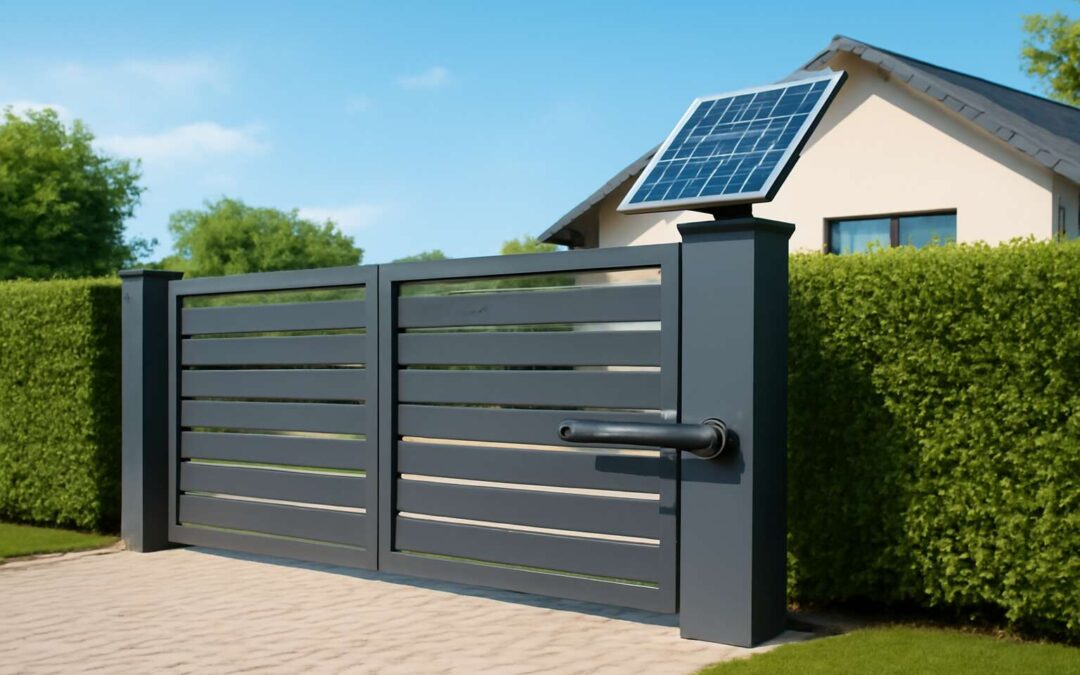
Understanding Solar Gate Motors
What a solar gate motor is and how it works
Sunlight powers more South African entrances than most realise, turning gateways into quiet sentinels of daily life. A veteran installer offers this crisp verdict: “The sun is the most dependable neighbor you have!” In this sun-kissed landscape, solar gate systems keep traffic flowing with grace and resilience.
Understanding solar gate motor installation begins with the basics: photovoltaic panels capture energy, a battery stores it, and a motor translates that charge into the opening and closing of the gate. The flow is gentle yet steadfast, even when night falls or clouds drift by. The essentials include:
- solar panels
- charge controller
- deep-cycle battery
- gate motor or actuator
Together, they create a silent, sun-fed partnership that elevates curb appeal and security. In a South African setting, this technology blends with local architecture and climate, delivering efficient access without fuss.
Core components of a solar gate system
South Africa enjoys over 2,000 hours of sunshine each year, a daily income of light that quietly guards doorways. This is the essence of solar gate motor installation: energy captured by panels is stored in a battery and released to move the gate with calm precision, rain or shine.
- solar panels
- charge controller
- deep-cycle battery
- gate motor or actuator
Each component plays a patient role in a seamless rhythm. The panels harvest daylight, the controller guards the charge, the battery stores resilience, and the actuator translates energy into motion—quietly, repeatedly, through seasons.
Key benefits of solar-powered gate automation
South Africa basks in over 2,000 hours of sunshine each year, turning daylight into a steadfast security partner. For solar gate motor installation, the sun becomes your power source, delivering motion with quiet precision and reliability—even when grid power flickers. The result is automation that works day after day, rain or shine—it just works.
Here are the key benefits that make this approach compelling:
- Off-grid reliability during outages and load-shedding.
- Lower operating costs compared with mains-powered systems over time.
- Quiet, smooth operation that respects the aesthetics of your property.
- Flexible placement and easier retrofits on existing gates in homes and businesses.
With the right setup, you gain predictable access, reduced maintenance, and a system that blends with South African homes and businesses. The sun’s unthrottled energy stands behind every opening, giving you calm, consistent motion across seasons.
Common gate types compatible with solar drive
South Africa’s sun isn’t just scenery; it’s a driver of access that quietly reshapes gate technology. With abundant daylight, solar gate systems align with everyday living, delivering dependable operation across seasons.
When aligning solar drive with your existing entrance, several gate configurations stand out as particularly compatible:
- Swing gates: hinged panels that open a wide driveway with compact, reliable DC motors.
- Sliding gates: rack-and-pinion systems that glide on rails, ideal for long driveways.
- Cantilever sliding gates: heavy-duty, trackless solutions that push loads without footings into the opening.
In practice, the best fit depends on gate weight, hinge condition, and available sun exposure. This is where solar gate motor installation planning becomes crucial, balancing power budget with door duty to ensure consistent operation through seasons.
Comparing solar vs. wired gate opener systems
South Africa basks in roughly 2,500 hours of sunshine each year, a potent metronome for solar gate motor installation that keeps driveways singing with dependable motion. The choice between solar and wired gate openers matters as much as the gate itself; it shapes responsiveness, maintenance, and long-term costs.
Solar gates lean on daylight and batteries, trading constant mains for energy stored in cheerful batteries and robust panels. Wired systems rely on a steady electrical feed, with predictable performance but vulnerability to outages and trenching. Consider these contrasts:
- Power independence during load shedding and outages
- Wiring simplicity versus ongoing battery upkeep
- Upfront cost strength versus long-term electricity savings
In a South African context, the choice reflects sun exposure, gate duty, and where the energy finds its rhythm—between the sunlit gate and the quiet heartbeat of a well-tuned entrance.
Planning and Sizing a Solar Gate System
Assessing gate size, weight, and travel distance
South Africa basks in sun, and planning the gate system becomes a hinge between endurance and elegance. The planning and sizing of a solar gate system hinges on a careful assessment of gate size, weight, and travel distance—the trio that decides whether the motor hums with ease or strains in the heat. A well-matched configuration respects daily use, seasonal sun, and entry geometry, turning a smart idea into reliable automation via solar gate motor installation.
Consider these factors:
- Gate dimensions: width, height, leaf style.
- Weight and hinge/track conditions: heavier gates demand higher torque.
- Travel distance and opening speed: longer traverses require torque headroom.
- Exposure and wind: sun exposure boosts panel performance; factor wind loads.
From these inputs, the design balances torque, battery reserve, and panel area, creating a resilient system that performs through outages and long days, without hurried improvisation.
Evaluating site exposure and solar resource
South Africa basks in a climate that some call a solar windfall, and the numbers prove it: sun-drenched days translate into dependable automation when the planning is precise. A well-timed solar gate motor installation starts with measuring site exposure and solar resource, because even a whisper of shade can curb performance. Mapping sun paths throughout the year lets the system choose the right panel positioning and battery backing. The result is a gateway that hums through outages and heat, with confidence, not compromise.
To translate this into reality, evaluate these exposure factors:
- Sun exposure duration and intensity across seasons
- Shade from trees, buildings, or fences during peak hours
- Panel orientation and mounting height for clear sky view
- Wind loads and temperature effects on gate travel
From exposure to torque headroom, the design balances torque, battery reserve, and panel area, creating resilience that persists through long days and outages.
Choosing solar panel wattage and mounting options
Sunlight is not a luxury; it’s an ally that writes the script of your gate’s life. In South Africa, where every dawn feels like a promise kept, we measure potential as much as performance. The sun doesn’t take weekends off, a veteran installer reminds me, and that truth guides every solar gate motor installation.
Planning and sizing hinge on a simple yet exacting math: match panel wattage to the gate’s peak travel current, reserve enough energy for outages, and respect seasonal shift in sun. Choose mounting options that keep the array clean and unshaded—roof, wall, or stand‑alone frames—so you harvest every sunlit minute.
- Assess daily energy rhythms and peak surge to inform panel wattage
- Consider mounting height and orientation to maximize sun capture
- Account for wind load and thermal effects on battery life
Sizing battery capacity and autonomy for daily use
Sunlight is a daily mentor; in South Africa, the gate’s life hinges on the sun’s punctuality. ‘The sun doesn’t take weekends off,’ a veteran installer reminds, and that truth shapes every solar gate motor installation.
Planning battery capacity and autonomy for daily use hinges on the rhythm of your site: steady daily motion, occasional outages, and the seasonal swing of light. In gate motor installation projects, the aim is to pair energy capacity with duty cycles while preserving battery health and avoiding needless deep cycles.
- Battery chemistry and cycle life tailored to local climate
- Autonomy buffers that cover typical cloud days
- Temperature and wind effects on performance and longevity
Considering local permits, HOA rules, and codes
“The sun doesn’t take weekends off,” a veteran installer reminds us, and that truth guides every solar gate motor installation in South Africa. Planning around permits, HOA rules, and codes keeps the project honest, legal, and on time. Sizing decisions must align with these constraints, so the system breathes with quiet confidence under ever-shifting skies.
Before you order a single panel, consider:
- Local permits and electrical approvals
- HOA covenants on gate aesthetics and access
- Municipal codes for wiring, grounding, and safety
Alignment with local permits, HOA rules, and codes shapes the character of your installation and the neighborhood’s quiet trust in a system that stands against time and weather.
Installation Steps and Best Practices
Site preparation and secure mounting foundations
Sun-splashed driveways in South Africa teach a blunt truth: solar gate motor installation is as much about foundations as sunshine. In SA, 60% of gate issues trace to improper mounting, not power, and that statistic is a siren call for better practice.
Before you lay the first ribbon of cable, attend to site preparation with a craftsman’s care. Level ground, clear the approach, and think about drainage so rainwater never invites chaos under the pad!
- Level, compacted footing on solid soil
- Run weatherproof conduit for cabling
- Position with clearances for swing and maintenance
Secure mounting foundations are the anchor of longevity. A reinforced concrete pad, proper anchor bolts, and corrosion-resistant fittings guard against wind gusts and soil movement—because a glinting solar array deserves a steadfast stage!
Panel mounting, wiring routes, and controller placement
A strong start matters more than flawless weather in solar gate motor installation. Panel mounting should be considered with a craftsman’s eye: secure, level supports, corrosion-resistant hardware, and thoughtful tilt toward the sun. Plan the wiring routes and controller placement so cables disappear behind the pad rather than underfoot, preserving both safety and style.
- Panel mounting on sturdy, level supports with corrosion-resistant hardware and proper tilt for sun exposure.
- Wiring routes that stay tidy and protected, with weatherproof conduit and gentle bends to minimize wear.
- Controller placement in a dry, ventilated, accessible spot near the gate, away from vibration and heat sources.
With these considerations, solar gate motor installation in SA blends practicality with endurance — a system that looks as good as it runs and minimizes maintenance over time.
Gate operator installation, mounting, and alignment
Three seconds can decide the fate of a gateway: a smooth, silent opening that feels almost supernatural. In South Africa, flawless solar gate motor installation means security and convenience without tripping breakers or hauling heavy cables.
Begin with a solid, level mounting surface and hardened fasteners. Then align the operator with the gate leaf, adjust hinges, and set end-stops for precise travel.
- Mount the operator to a stable base
- Align gate alignment and set end-stops
- Calibrate limit switches and test cycles
Finish with weatherproofing, cable management, and safe clearance checks. Proper solar gate motor installation reduces wear and keeps automation reliable in sun, dust, and heat.
Electrical connections, grounding, and weatherproofing
A solid install is the unsung guardian of every South African gateway. With solar gate motor installation, you get quiet reliability that feels almost supernatural, standing up to sun, dust, and the occasional power outage. Precision here safeguards security and keeps open-and-close cycles smooth as silk.
- Electrical connections: route conductors in watertight conduit; protect from dust and UV.
- Grounding: bond the drive to the building earth; verify continuity and shielding.
- Weatherproofing: seal enclosures, use IP-rated junction boxes, gasketed covers.
Finish with neat cable management, strain relief, and routine testing to confirm safe clearance and reliable performance in SA heat.
Safety protocols and lockout/tagout procedures
Power outages are a daily test in SA, and a gate that balks at the moment of truth betrays you. In solar gate motor installation, safety is not an afterthought—it’s the quiet conductor behind flawless operation.
Lockout/tagout procedures ensure the system is de-energized before any service. Treat all sources as live until verified isolated; designate authorized personnel; use PPE; secure the work area; post clear signage. A proper risk assessment guides the approach, reducing downtime and protecting property and people.
Within the workflow, consider these core concepts:
- Energy isolation and control zones
- Verification of zero-energy state
- Clear tagging and restricted access
When these principles sit alongside careful attention to hardware fit and weatherproofing, the installation delivers reliability that feels almost supernatural in SA heat.
System testing, calibration, and commissioning
After the hardware is set, the true test begins: system testing, calibration, and commissioning. In solar gate motor installation, this phase isn’t an afterthought—it’s the difference between hesitation and a gate that sweeps open as if summoned by magnetism. Expect thorough checks of control logic, safety interlocks, and battery health under the South African sun.
- Power down and verify isolation before touching any live conductors.
- Test all signals: remote, loop sensors, and safety edges for reliability.
- Calibrate limits and edge sensors with realistic travel and load.
- Commission and document results, then perform a controlled open/close cycle.
This is the moment when the solar gate motor installation wraps up and you can hand the system to its new owners with a wink and a warranty card. A well-tuned setup behaves like magic in SA heat, predictable and quiet under load.
Safety, Compliance, and Warranty
Electrical safety and code compliance for solar gate setups
Safety isn’t an afterthought—it’s the hinge on which every solar gate motor installation turns. Electrical safety and code compliance are non-negotiable for solar gate setups in South Africa, where weather extremes test every cable and connector.
Compliance means certified components, proper grounding, and weatherproof enclosures, all aligned with SANS 10142-1 and local regulations. To keep it pragmatic, check these essentials:
- Certified components with valid approvals
- Solid grounding and bonding
- Weatherproof enclosures and conduit seals
- Correct overcurrent protection and GFCI where required
Warranty hinges on professional installation, correct documentation, and routine maintenance. If you bypass licensed electricians or skip test and seal integrity, the warranty may vanish. A well-documented installation protects both your assets and your reputation.
Permits, inspections, and accessibility requirements
Storm-season in South Africa tests every outdoor electrical setup. Safety isn’t optional—it’s the hinge on which solar gate motor installation turns. The right permits, routine inspections, and accessibility considerations keep people safe and systems resilient, even when weather throws a curveball. “Safety is a hinge that never wobbles,” a quiet maxim I’ve seen prove its weight on every job.
- Permits, approvals, and local authority notifications
- Structured inspections and compliance documentation
- Accessibility considerations for users with mobility constraints and clear signage
Warranty rests on professional installation, documented testing, and scheduled maintenance. Skip licensed electricians or seal the system improperly, and the protection erodes, along with your reputation.
Following manufacturer guidelines and understanding warranties
Safety isn’t optional—it’s the hinge on which a solar gate motor installation turns. In South Africa’s storm season, a loose conductor or jammed sensor can turn routine closure into a hazard. ‘Safety is a hinge that never wobbles,’ a maxim that has proven its weight on every job.
Compliance is more than ticked boxes; it is a living contract with the maker’s guidelines and local realities. Properly documented commissioning protects people and prolongs component life. For a durable setup, rely on professionals who measure, test, and certify the system’s readiness.
- Licensed electricians handle electrical connections and grounding
- Documentation of testing, calibration, and warranty activation
Warranty rests on professional installation, documented testing, and scheduled maintenance. Skipping licensed electricians or sealing the system improperly undermines protection and your reputation, and then the gate becomes a liability rather than a safeguard.
Protection against surges, wiring faults, and EMI
Storm season in South Africa makes safety non-negotiable in solar gate motor installation. A robust system keeps people and property safe when lightning or gusts strip lines bare. Surges, EMI, and hidden wiring faults can turn routine closure into a hazard, so safety remains the hinge of every project.
- Surge protection devices and proper grounding safeguard DC and AC paths
- EMI mitigation through shielding and controller filtering prevents false sensor triggers
- Wiring routes are planned to isolate faults and maintain operation
Compliance isn’t a tick-box ritual; it’s a live contract with maker guidelines and local realities. Licensed electricians handle connections and grounding, and commissioning records testing, calibration, and warranty activation to prove readiness.
Warranty protection rests on professional installation and scheduled maintenance, with clear records shielding against surges, wiring faults, and EMI. Proper solar gate motor installation habits keep protection intact.
Documentation, service records, and maintenance logs
Across South Africa, 7 out of 10 electrical faults in automated gates are traced back to gaps in documentation—a sobering statistic that makes safety non-negotiable. Every safeguard hinges on traceable records that prove the system was built, tested, and calibrated for your site.
Safety, compliance, and warranty documentation aren’t bureaucratic hurdles; they’re living guarantees. Commissioning records, test results, calibration notes, and warranty activations demonstrate readiness for solar gate motor installation, a clear service history helps diagnose faults before they bite and keeps insurer and client aligned.
- Commissioning reports and calibration certificates
- Maintenance logs, battery health checks, and sensor alignment notes
- Grounding verification and warranty activation documentation
Make records accessible, durable, and linked to a responsible custodian. Regular maintenance logs ensure planned upkeep remains part of the system’s story.
Maintenance, Troubleshooting, and Upgrades
Routine maintenance checklist for solar gate systems
Maintenance is the quiet heartbeat of solar gate motor installation. Regular checks keep gates moving in South Africa with the ease of a lighthouse beam across a calm bay. Visual inspections, weatherproofing seals, and sensor cleanliness preserve reliability and extend life.
- Visual inspections
- Track and sensor cleaning
- Battery health checks
- Controller firmware updates
Troubleshooting emerges like a puzzle in moonlight. If performance wanes, consider power scarcity, wiring corrosion, or misaligned safety switches. Observing symptoms—slow operation, unexpected stops, or noisy operation—helps narrow faults without prescriptive steps.
Upgrades can breathe new life into your system: practical enhancements include larger battery capacity, higher-efficiency panels, and smarter monitoring. Remote diagnostics and alerts offer peace of mind without waving a manual in the wind.
- Battery capacity enhancements
- Solar panel efficiency improvements
- Remote diagnostics and alerts
Diagnosing and fixing common issues with solar gates
Maintenance is the quiet heartbeat of solar gate motor installation in South Africa, where a clean sensor, weatherproof seals, and tidy wiring keep gates gliding with the reliability of a lighthouse beam. Regular visual checks, weatherproofing, and battery health monitoring preserve longevity and performance.
Troubleshooting emerges like a puzzle in moonlight. Symptoms guide the diagnosis, from gradual performance dips to odd noises or unexpected stops. Accurate readings—speed, alignment, and sensor responses—steer the investigation toward plausible causes without guesswork.
- Slow or jerky movement
- Unexpected stops or reversals
- Strange noises or sensor glitches
Upgrades can breathe new life into a system: larger battery capacity, higher-efficiency panels, and smarter monitoring. Remote diagnostics and alerts offer peace of mind without waving a manual in the wind.
Monitoring battery health and planning replacements
In solar gate motor installation, maintenance becomes the quiet engine that keeps gates gliding through South Africa’s seasons—rain or shine. A clean battery, weatherproof seals, and tidy wiring stave off downtime and extend life.
- Regularly check battery voltage and charge state
- Inspect seals and weatherproof connections
- Clean sensors and wipe dust from panels
- Secure wiring routes and shield from corrosion
Troubleshooting arrives like clues in a lantern-lit trail: slow or jerky motion, unexpected stops, strange noises. Track speed, travel limits, and sensor responses to isolate causes—often a misalignment or worn motor gear.
Upgrades can refresh an aging setup: bigger battery capacity, smarter monitoring, and higher-efficiency panels. Remote diagnostics and proactive alerts help plan replacements before failures.
- Battery capacity upgrade
- Panel efficiency improvement
- Remote monitoring system
Upgrading components for efficiency and reliability
Maintenance is the quiet heartbeat of solar gate motor installation in South Africa, where scorching sun and sudden showers test every seal. A clean battery, weatherproof seals, and tidy wiring stave off downtime and prolong life.
We perform regular checks on voltage and charge state, plus seals and weatherproof connections, keeping the system resilient! Clean sensors and dust-free panels preserve responsiveness and efficiency.
Troubleshooting arrives like clues in a lantern-lit trail: slow motion, unexpected stops, or odd noises signal something amiss. Note speed, travel limits, and sensor responses to identify roots—often a misalignment or worn gear.
Upgrades can refresh an aging setup: bigger battery capacity, smarter monitoring, and higher-efficiency panels.
- Battery capacity upgrade
- Panel efficiency improvement
- Remote monitoring system
This is all part of solar gate motor installation—building future-proof reliability across SA’s changing climate.
System monitoring, remote control, and analytics
In South Africa, heat and sudden showers test every seal, and maintenance becomes the quiet heartbeat of solar gate motor installation. Field data show regular upkeep reduces downtime by roughly 40%, keeping entrances secure through blazing days and heavy storms. A clean battery, weatherproof seals, and tidy wiring stave off downtime and prolong life.
Troubleshooting arrives like clues along a lantern-lit trail: slow motion, unexpected stops, or odd noises signal something amiss. Note speed, travel limits, and sensor responses to identify roots—often a misalignment or worn gear. Caring eyes and patient listening save time and stress when the system balks.
Upgrades can refresh an aging setup: bigger battery capacity, smarter monitoring, and higher-efficiency panels. For solar gate motor installation projects, enhancements like the following can matter:
- System monitoring and alerts that flag anomalies
- Remote control through a secure mobile app
- Analytics on energy use, duty cycles, and fault trends
This approach builds future-proof reliability across SA’s changing climate.
Preventive measures to extend system life
In solar gate motor installation, maintenance is the quiet heartbeat that keeps entrances secure through SA’s heat and sudden showers. Seals battle the weather and batteries endure long days, so caretaking—watching for corrosion, keeping wiring tidy, and ensuring weatherproofing—extends lifespans and reduces surprises.
- System monitoring and alerts that flag anomalies
- Remote control through a secure mobile app
- Analytics on energy use, duty cycles, and fault trends
Troubleshooting arrives like clues along a lantern-lit trail: slow motion, unexpected stops, or odd noises signal something amiss. Observers note speed, travel limits, and sensor responses to locate roots—often misalignment or worn gears. Patience and careful listening save time when the system balks.
Upgrades refresh an aging setup: larger battery capacity, smarter monitoring, and higher-efficiency panels. For projects of this kind, these enhancements can boost reliability and help the system weather SA’s shifting climate.