
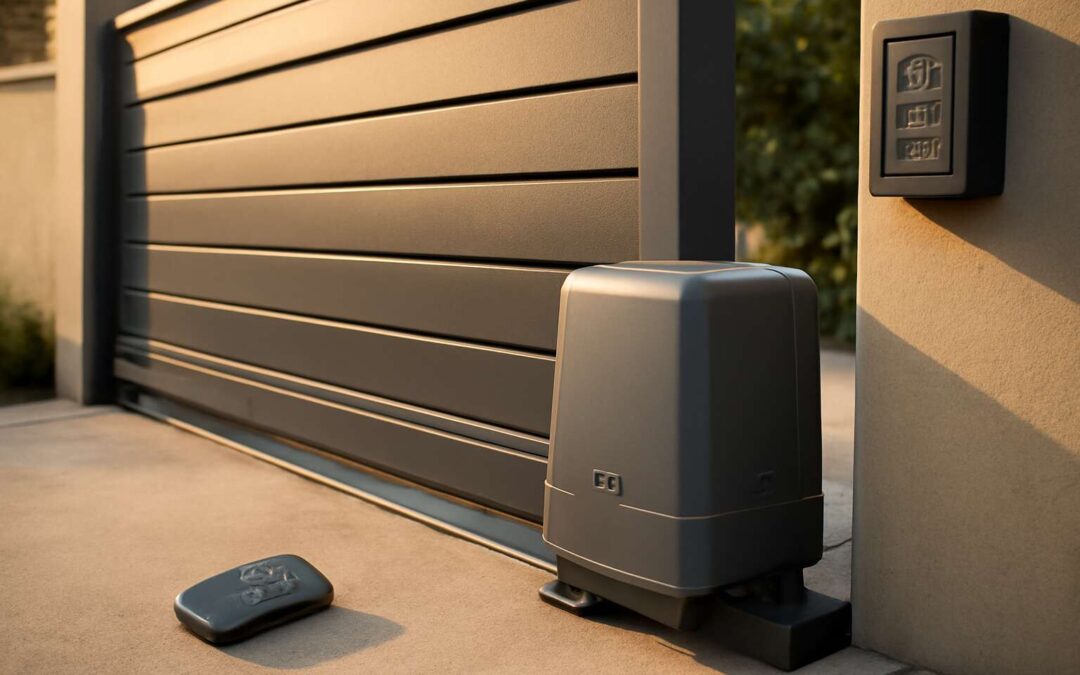
Gate motor fundamentals
What a gate motor does and why it’s used
Across South Africa’s fenced estates and bustling townships, the question of how does a gate motor work looms large in everyday security and convenience. It is more than a hinge’s ally; it is a deliberate pause, shaping the moment someone arrives and the moment they depart.
As a compact act of energy, a gate motor converts electrical energy into measured, smooth motion, driving a sliding or swing arm. It coordinates with detectors and safety sensors, ensuring the gate halts at the right moment and keeps fingers safe. Users are drawn to the elegance of automation—the gate opens with a touch or timer, and closes when the light fades.
- Sustainable drive preserves weight and wind handling
- Safety interlocks prevent entrapment
- Flexible power options, from mains to solar
From a psychological lens, the motor embodies trust, boundary, and the quiet confidence that the daily rhythm of life will resume with just a touch.
Key components of a typical automatic gate system
Across SA driveways and gated estates, the gate motor is the quiet conductor of daily life—opening moments and closing rituals that keep the street at bay and your rhythm intact. how does a gate motor work? In essence, it converts electricity into measured motion, turning a motor shaft into a sliding or swinging arm while whispering to safety sensors to halt at the right moment.
- Motor and drive train
- Control board and remote receiver
- Safety interlocks and photocells
- Power options: mains, backup battery, or solar
These parts dance together with a dash of reliability, giving you the smooth, almost clinical, choreography of your morning arrival—no drama, just a gate that behaves. A little tech theatre for the home, performed with SA swagger.
Power options and common voltage standards
Across SA driveways, the gate motor is the quiet conductor behind every morning. The gate doesn’t shout, it moves with measured authority. how does a gate motor work? It converts electricity into controlled motion, turning a motor shaft into a sliding or swinging arm while coordinating with safety sensors.
Power options drive this reliability. In SA, mains 230V is standard, but the motor often runs at 12V or 24V DC via a step-down and gear train. A backup battery keeps gates moving during outages, and solar panels with a controller extend operation for remote estates.
- 230V mains with transformer and control board
- 12V or 24V DC battery backup
- Solar power with an MPPT controller
Safety features to look for in a gate motor
Across South Africa’s driveways, automation quietly anchors daily life. This is where the question ”how does a gate motor work” translates into safe, reliable performance. It translates energy into motion, turning a shaft into a swinging or sliding arm while balancing torque, speed, and reliability. The result is a gate that moves with purpose, not noise.
Gate motor safety is not a garnish but a foundation. Essentials include sensors, automatic reversal, and a fail-safe manual release, all designed to prevent injury, property damage, or unexpected contact when the gate nears an obstacle.
Key safety features to expect:
- Photoelectric sensors detect obstructions
- Edge or pressure sensors prevent pinches
- Soft-start and soft-stop for smooth, safe motion
- Manual release for power outages
- Reliable obstacle monitoring and reversal
For South African installations, these protections harmonise with 230V mains, battery back-up, or solar options, delivering dependable access control that respects both property and people.
Types of gate motors
Sliding gate motors
Across South Africa, automated driveways are no longer a luxury but a daily convenience—roughly 70% of households with gates use a motor to open and close, rain or shine.
Types of gate motors for sliding gateways come in a few practical flavours. The primary drives you’ll encounter are:
- Chain-driven sliding gate motors
- Belt-driven sliding gate motors
- Rack-and-pinion sliding gate motors
They share a simple spine: a motor turns a drive mechanism along a track, pulling or pushing the gate smoothly. how does a gate motor work? Energising the controller engages gears or belts, translating rotation into linear motion while a trolley glides along the rail to safe stops.
Swing gate motors
Across South Africa, a well-tuned gate motor makes an ordinary entrance feel deliberate and secure. Swing-gate systems split into two main families—the quiet hydraulic models and the brisk electro-mechanical variants—each translating torque into a smooth arc that welcomes or deters with equal poise.
- Hydraulic swing gate motors: heavy-duty, soft-start, exceptionally quiet, suited for large gates and windy sites
- Electro-mechanical swing gate motors: compact, fast, reliable, and budget-friendly for lighter, frequently used entrances
So, how does a gate motor work in a swing setup? The answer lies in compact drive arms and limit switches that translate rotation into the gate’s smooth arc, while sensors ensure safe stops and counter-weights balance wind load.
Underground and pillar-mounted motors
Across South Africa, the gate is the first handshake of a home—a symbol of welcome and protection. The question how does a gate motor work reveals a story of quiet engineering behind a smooth arc. In rural and urban settings, underground and pillar-mounted systems rise to meet this need in distinct, practical ways.
Underground motors tuck neatly out of sight, their gears and limits tucked beneath the soil while weather seals hold fast against wind and dust. They’re ideal where aesthetics count or where tampering is a concern.
- Underground installation — discreet and weatherproof
- Pillar-mounted installation — accessible wiring and easy maintenance
Pillar-mounted motors stand tall, offering accessible wiring and straightforward maintenance while standing up to wind and sun with sturdy housings. They’re often the go-to choice for busier entrances that see frequent use.
Articulated and vertical-lift motors
In South Africa, a gate isn’t just a barrier—it’s the first handshake of a home, offering welcome and security. The question how does a gate motor work reveals a tidy ballet of gears, sensors, and control boards that keeps the arc smooth and deliberate. Articulated and vertical-lift motors answer different driveway needs with swagger and pragmatism.
Articulated gate motors use a jointed arm that folds as it extends, ideal for crooked driveways or tight corners. They thread through limited spaces with precision and tolerate wider swing angles without crowding the fence line.
- Flexible mounting options and long reach.
- Smooth starts and stops that protect hinges.
Vertical-lift motors rise the gate straight up, preserving ground clearance and keeping dust and mud at bay. They’re a clever fit for urban plots and high-wind zones, where a compact footprint matters and maintenance stays simple. how does a gate motor work becomes a case study in vertical choreography for tight spaces.
Mechanism of operation
Electric motor to rack and pinion or chain drive
From the moment a gate whispers open at dawn to the quiet closing at dusk, I watch the mechanism do its work with restrained poetry. For those asking how does a gate motor work, the answer rests in a simple, precise dance between electric motor and the moving heart of a gate: a rack and pinion or a chain drive that translates rotational energy into smooth, linear motion. This is the core of reliability—torque, timing, and calm control doing their silent, everyday magic.
- Signal energizes the motor, starting the motion.
- Torque travels through gears to the drive train.
- The rack and pinion or chain converts rotation to linear travel.
- Limit switches stop the gate at endpoints and feed safety interlocks.
In South Africa, the rhythm of such mechanisms meets the heat and dust of suburbia, delivering quiet reliability that underpins daily life and secure access.
Control circuits and relays
“A gate motor is the quiet guardian of the day,” a neighbour once told me. You might ask how does a gate motor work in the rhythm of a South African driveway, turning dawn hesitation into secure passage with practiced ease.
Behind that ease lie control circuits and relays. They translate a simple press, remote signal, or sensor cue into precise motor commands, while safeguarding the route with timed sequences and fail-safe checks that stop motion before overrun.
- Input signals from remotes and keypads are filtered by logic
- Relays switch high-current power without exposing users to voltage
- Feedback loops track position and enforce safe stopping
In a compact cabinet, a microcontroller weighs inputs and, with timing rules, guides smooth, quiet travel. The result feels like a trusted promise in rural life, where gates open to welcome visitors and close to protect crops and kin.
Limit switches and safety sensors
That satisfying click at full travel isn’t magic; it’s limit switches and safety sensors doing the heavy lifting. This is the mechanism of operation in action: the gate motor relies on end-of-travel switches to signal when to stop, reverse, or stall with dignity. how does a gate motor work? The answer sits in a tidy box of contacts and logic behind the scene for South African driveways.
Limit switches come in a few guises: mechanical cams triggered by moving parts, magnetic reed types that sense position without contact, and optical or electronic equivalents for a gentler touch. Safety sensors watch the doorway: photoelectric beams and edge sensors immediately halt motion if something intrudes or if the blade would crush a pedestrian.
- Mechanical end-of-travel switches
- Magnetic reed position sensors
- Photoelectric safety beams
- Edge or pressure-sensitive safety sensors
Remote controls and access systems
The gate hums not by brute force, but by coded consent! how does a gate motor work? A pressed remote fires a coded radio signal to the receiver in the control box. The microcontroller authenticates the signal, then commands the motor to spin or glide, engaging the drive mechanism—rack and pinion in many setups or a sturdy chain. The result is a quiet, precise movement that respects end-of-travel points and safety sensors already checked in the background.
- Handheld remotes
- Keypads and smart fobs
- Smartphone apps and cloud integration
These remote methods talk to the gate’s brain—the control module—through encoded signals, timing logic, and reliable power delivery that keeps South African driveways secure without drama.
Behind the scenes, the elegance lies in the timing and feedback loop: the motor power is modulated, positions are confirmed, and a stall condition prevents damage, letting the system operate with dignity and restraint.
Installation and integration
Site assessment and clearance requirements
A gate isn’t simply metal; it’s a welcome mat with a heartbeat! In South Africa, the question of how does a gate motor work starts with site assessment and clearance considerations, because the path of motion must breathe—free from overhanging branches, vehicles, or pedestrians in the swing. A well-planned layout prevents surprises and keeps security and traffic flow in pristine balance.
- Evaluate travel path for safe pedestrian and vehicle zones.
- Check power access and routing for outdoor reliability.
- Assess mounting surfaces and obstructions that could impede operation.
Installation and integration hinge on compatibility with current control circuits and local regulations, ensuring a seamless blend with existing security systems. The result is a cohesive, dependable gateway that enhances curb appeal while preserving safety.
Choosing the right drive system for your gate
In South Africa, choosing the right drive system for your gate is a hinge on daylight and reliability. If you’re wondering how does a gate motor work, the answer lies in pairing motor type with the gate’s motion and the security ethos you demand. Installation and integration favor drive systems that talk to your existing control circuits and suit the local power landscape—think backup options for Eskom interruptions and weather-ready housings, a choice that quietly shapes daily life!
- Drive type compatibility (sliding vs swing)
- Mounting space and track alignment
- Power source reliability and backup options (grid, generator, solar)
- Interface with existing control circuits and security systems
With the right choice, your gate becomes a secure, stylish threshold that serves daily life without drama.
Wiring and electrical safety considerations
So how does a gate motor work in the field where storms sweep across the plains and power outages are part of daily life? It starts with careful installation and integration—planning how the motor talks to the control circuit, choosing the right wiring routes, and ensuring weatherproof housing.
Key wiring and electrical safety considerations include:
- Run power and low-voltage control cables in separate conduit and keep them clear of moving parts.
- Size conductors correctly and protect them with weatherproof enclosures and grommets.
- Fit a clearly labelled isolation switch and ensure proper earthing for safety during outages and storms.
A qualified electrician can wire the system with neat, serviceable joints, safeguarding your daily life when the gate becomes a quiet, faithful threshold.
In the SA climate, corrosion-resistant fixings and proper sealing keep the system singing for years.
Mounting, alignment, and testing procedures
Industry statistics put two-thirds of gate malfunctions down to mounting and alignment. So, how does a gate motor work in the real world where wind lashes the plains and storms test every hinge? Installation and integration begin with a solid cradle: mounting to a level, clean surface, aligning the motor’s output to the gate’s hinge line, and routing cables away from moving parts. When these elements are precise, the motor breathes rather than groans, delivering dependable, quiet duty amid wind and rain.
Testing confirms these choices. A thorough run-through of opening, closing, and stall checks under varying loads is essential to prove resilience.
- Mounting to a stable, level surface with corrosion-resistant fixings
- Precise alignment between motor output and gate movement
- Verification of sensor responses and end-stop accuracy under wind and rain
Only with such integration does the system become a quiet, loyal threshold for daily life.
Maintenance, safety, and troubleshooting
Routine maintenance checklist and scheduling
Maintenance is the quiet heartbeat of a gate motor. When you ponder how does a gate motor work, the answer widens from spark to rhythm and routine. In South Africa’s driveways, a well-tuned system shrugs off dust and heat, keeping access flowing with dignity and preserving the life of gears and circuitry.
- Regular inspection of mounting hardware for wear
- Lubrication of gears and rails where applicable
- Checks on insulation and battery health for energy storage
- Periodic tests of safety sensors and control circuits
Safety is a guiding principle, not a feature list. If unusual grinding, misalignment, or unexpected stops occur, pause and seek expert advice rather than guessing. A sensible service cadence protects people and property across the nation.
Lubrication and wear parts inspection
Maintenance is the silent heartbeat of any gate system; neglect it and the romance of automation collapses into a squeaky apology. When pondering how does a gate motor work, you discover a blend of metal and manners—gears keeping time, sensors keeping promise, and routine care shrugging off dust in South Africa’s heat.
Safety is a constant companion; in the rare event of grinding or misalignment, pause and call in a pro. For trouble-shooting lubrication and wear parts inspection, consider these checks:
- Lubricate gears and rails with manufacturer-recommended lubricant.
- Inspect bearings, sprockets, and gear mesh for wear or pitting.
- Tighten mounting bolts and check for corrosion or looseness.
In practice, a strange noise or abrupt stop is a signal, not a mystery. Treat it as a cue to re-evaluate safety sensors and the physical foundation; a pro keeps the rhythm and dignity intact.
Troubleshooting common faults and error codes
In South Africa, 68% of automated gate faults trace to misread safety signals. When you ask how does a gate motor work, you glimpse a rhythm of gears, sensors, and patient maintenance!
Maintenance is the quiet pulse of reliability: lubricate gears and rails with the manufacturer’s lubricant, inspect bearings and gear mesh for wear, and tighten mounting bolts to resist heat and dust. A strange noise or abrupt stop is a cue to re-evaluate safety sensors and the foundation.
Troubleshooting common faults and error codes provides a bright diagnosis map for those moments when motion falters.
- Err E-01: Overload or stall
- Err E-02: Sensor obstruction or misalignment
- Err E-03: Communication fault between control panel and drive
These cues remind us that safety is a living discipline; when in doubt, a pro can recalibrate and preserve the gate’s rhythm.
Safety features and sensor testing
Maintenance is the quiet pulse that keeps a gate motor dependable, whispering through seasons of heat and dust. I lubricate gears and rails with the manufacturer’s lubricant, inspect bearings for wear, and tighten mounting bolts to resist heat and vibration. When you ask how does a gate motor work, you glimpse a rhythm of gears, sensors, and patient maintenance!
Safety features are not garnish but the mainline of reliability. In South Africa, misread safety signals account for many faults, so sensor testing and alignment deserve steady attention.
- Verify safety edges and photoelectric sensors are free of obstruction
- Assess sensor alignment and consistent actuation during gate travel
- Ensure fault indicators on the control panel illuminate correctly
Troubleshooting becomes a quiet map: Err E-01, Err E-02, Err E-03 hint at overloads, misreads, or communication faults. A professional recalibrates and preserves the gate’s rhythm, keeping the motion calm and reliable.