
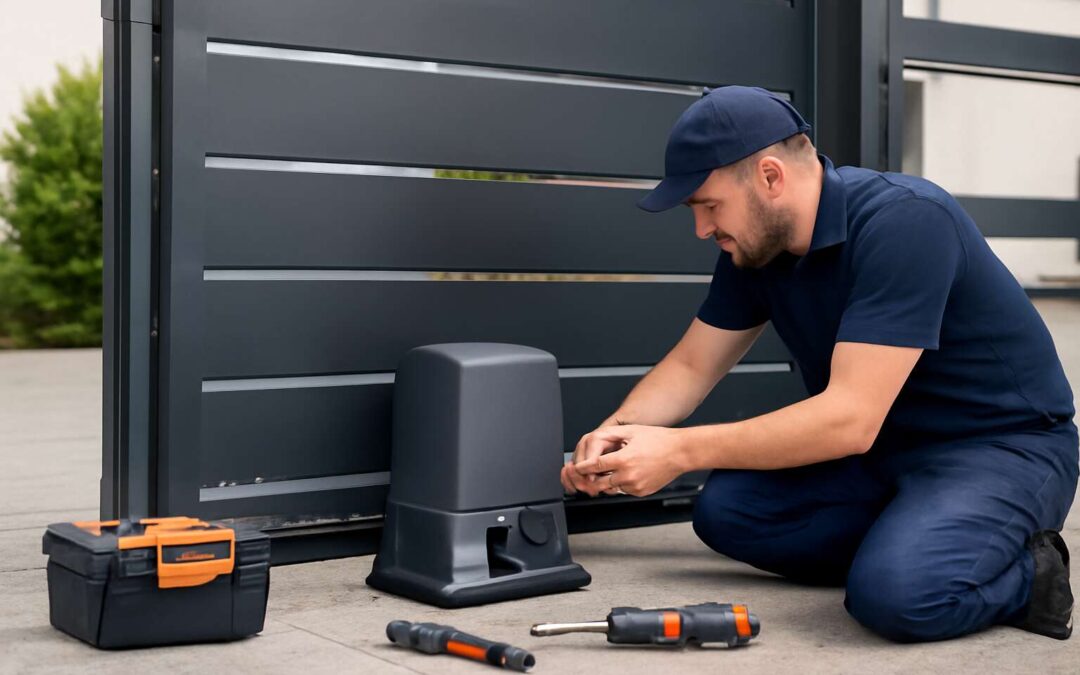
Gate Motor Systems: Replacement and Upgrades — A Multi-Section SEO Outline
Section 1: What is a gate motor?
Across rural South Africa, the gate is the opening line to home and harvest, and a dependable gate motor replacement keeps the story moving when winds rise and power dips. ‘Security is the first light at dawn,’ locals say, and the right motor makes that light steady rather than brittle. What is a gate motor? It is the mechanism that makes access safe with a touch of quiet efficiency.
Understanding what a gate motor does helps property owners see why replacement and thoughtful upgrades matter.
- Type compatibility with the existing gate
- Power options: mains or solar
- Enhanced safety features and sensor behavior
With thoughtful gate motor replacement, entrances stay reliable and dignified, even in harsh SA conditions. Upgrades translate to smoother routines, less downtime, and lasting trust between gate and home.
Section 1: Common gate motor types and how they differ
In rural South Africa, the gate is the opening line to daily life—where harvest and home meet. A dependable gate motor replacement keeps that line moving when winds rise and power dips. “Security is the first light at dawn,” locals say, and a steady opener makes that light glow rather than fracture.
Common gate motor types vary by drive and rhythm. Chain-drive units are rugged, great for hard-wearing gates; belt-drive models run quietly with less vibration; rack-and-pinion systems offer precise operation on level tracks.
- Chain-drive: rugged torque for heavy gates in windy SA environments
- Belt-drive: quiet operation and smoother motion
- Rack-and-pinion: accurate alignment for long-term reliability
Power options span mains and solar, important in remote properties, while safety features—photoelectric sensors, obstacle detection, and soft-start/stop—help preserve both gate and person. For a thoughtful replacement, assess how your entrance welcomes dawn in all seasons.
Section 1: When to replace rather than repair a gate motor
“When a gate falters, the day droops with it,” a neighbour from the Karoo often says. In South Africa’s rural heartland, a dependable gate motor replacement can restore daily rhythm, letting dawn walk in unimpeded. Weathered by wind and time, some drives simply outlive their welcome, and a thoughtful upgrade pays back in quiet reliability and safer operation.
Signs that replacement beats repair are practical and plain:
- Frequent faults or escalating service costs
- Drifted alignment or jerky starts under normal load
- Outdated safety features or incompatibility with solar power
Beyond merely swapping parts, a strategic upgrade—better sensors, soft-start, and solar options—transforms the gate into a steadfast guardian of property and people, a renewed installation sculpting reliability into every opening and closing.
Section 2: Signs indicating a replacement is needed
Dawn spills over the Karoo, and a gate that hesitates becomes the moment a property loses its rhythm. ‘A gate that lags is a barrier twice over,’ a neighbour says, and I hear the wind in the hinges. In South Africa’s rural heartland, a timely gate motor replacement restores the cadence of opening and closing, letting dawn walk in unimpeded.
Signs that a replacement is wiser than repair are practical and plain. Keep an eye on these telltales:
- Frequent faults or escalating service costs
- Drifted alignment or jerky starts under normal load
- Outdated safety features or solar power incompatibility
Beyond swapping parts, a thoughtful upgrade—better sensors, soft-start, and solar options—transforms the gate into a steadfast guardian of property and people. With careful planning, a gate motor replacement secures long-term quiet operation and reliable access for every dawn.
Section 2: How to assess compatibility with your gate system
Compatibility is the quiet gatekeeper of a dependable entrance. In South Africa’s diverse environs, the right motor is not a gadget but a strategic match—torque to weight, travel to arc, and mounting that fits the frame. Before any gate motor replacement, map the system: leaf weight, hinge spacing, and drive type (underground or surface). This alignment governs how the motor negotiates start, stop, and the gate’s patient hover at rest.
To gauge compatibility at a glance, consider these touchstones:
- Leaf weight, length, and hinge geometry
- Drive type and mounting geometry
- Electrical supply, control logic, and safety sensors
- Solar compatibility and battery options
That alignment yields reliable operation and a calm cadence of opening and closing, essential in rural precincts where detail matters. The result is a steadfast guardian that welcomes dawn and keeps weather at bay.
Section 2: Power, drive type, and load considerations for replacement
Across rural South Africa, up to 60% of gate issues trace to power and drive mismatches. That reality sharpens every installation, because the heart of your entrance must beat in tempo with its weight and arc. gate motor replacement is more than swapping parts; it’s about choosing a match that lasts beyond the next season and storms.
Power, drive type, and load are the trio that keep a gate reliable. Scan leaf weight, hinge geometry, and the drive’s mounting before you buy. Here’s a quick guide to keep the flow steady:
- Electrical supply and control compatibility
- Drive type: underground vs surface mounting
- Leaf weight and travel arc
Add safety sensors, solar compatibility, and battery options to future-proof the gate. A well-matched setup rides smoothly through seasons, from the first light to the last dusk, and protects what matters most—home, harvest, and heart.
Section 2: Safety precautions during assessment and replacement planning
Safety isn’t a feature—it’s the hinge on which every gate motor replacement turns. In field work across rural South Africa, careful assessment reduces downtime and extends service life. “Safety is the hinge on which every replacement turns,” a veteran installer reminds us, and the truth holds at the gate. We begin by reading the site: grounding, control compatibility, and the rhythm of power. This is stewardship, not haste.
Key safety guardrails during assessment include:
- Verify electrical clearance and ensure a stable power source
- Inspect mounting points, hinge alignment, and sensor placement to prevent entrapment
- Confirm that remote and access controls meet security standards
Future-proofing means planning for solar, batteries, and reliable backups, so gate motor replacement becomes a lasting partner rather than a quick fix.
Section 3: How to choose a replacement motor: essential features
Gate motor replacement is more hinge than hardware—a truth that settles the night into place. Across South Africa’s rural fringes, the right choice fuses reliability with quiet resilience, turning downtime into a measured ritual. “A sturdy mover is a silent guardian,” a seasoned installer once whispered, and that axiom holds fast when the gate leans into a storm!
When choosing a replacement motor, seek features that outlast the first season. Compatibility with existing rails and control ecosystems, rugged construction, and dependable safety interfaces deserve prime attention. The following features form a solid fingerprint for any credible option:
- Compact footprint and mounting compatibility with current hardware
- Weatherproof housing and proven long-term durability
- Secure, resilient control interfaces and remote compatibility
- Local service support and readily available parts in SA
These traits forge a lasting alliance rather than a fleeting fix.
Section 3: Battery backup, solar options, and smart features
Power resilience keeps gates moving when the mains fail. In South Africa, one in five new installations now include battery backup, a clear shift toward continuous operation. gate motor replacement is part of that shift, tying reliability to energy security and storm readiness.
Battery backup options range from sealed lead-acid to lithium packs, with solar charging to replenish during daylight. Smart features monitor status, send alerts, and enable remote control. All told, gate motor replacement is evolving with energy-smart design.
- Battery backup options: lead-acid vs. lithium, runtime expectations
- Solar options: panel placement, charge controllers, shading considerations
- Smart features: app access, diagnostics, remote locking
Section 3: Integration with existing controllers and remotes
“Control is security,” the saying goes, and in South Africa that control now extends from a click at the gate to diagnostics in your pocket. Gate motor systems are no longer solitary devices; they’re connected guardians of your boundary. The trend toward integration with existing controllers and remotes is turning replacements into upgrades. A well-chosen gate motor replacement harmonizes old remotes with new boards, delivering a reliable handshake at every opening, even when weather and outages conspire.
- Compatibility checks with current remotes and control boards
- Remote programming to clone or reassign fobs and codes
- Security enhancements like rolling codes and audit logs
With these integrations, energy-smart operation becomes the norm, and gate motor replacement evolves from repair into upgrade, keeping SA properties secure and accessible even through storm seasons.
Section 3: Warranty, certifications, and long-term costs
Gate systems guard more than property; they guard peace of mind. In gate motor replacement decisions, warranty acts as a shield against the unknown, typically offering 3 to 5 years on motors and control boards when installed by accredited technicians. Certifications—SABS-compliant components, electrical safety standards, and tested interlocks—anchor trust and resilience against SA weather and outages.
Long-term costs unfold as a steady horizon: routine servicing, occasional component refresh, and parts availability that keeps the system humming through years of storms. A clear quote will spell maintenance intervals, battery backups, and compatibility upgrades that preserve seamless remotes and controllers. That’s the promise of gate motor replacement: reliable, long-term access.
- Warranty duration and coverage
- Certifications and safety approvals
- Estimated long-term maintenance costs
Section 4: Installation steps overview
Across rural South Africa, the gate is more than an entry; it’s a quiet guardian of family and farm. A well-planned gate motor replacement project begins with a quiet commitment to safety and reliability, and I hear that truth every day on our drives home. A client once told me, “a secure gate is a good night’s sleep.”
Section 4 presents an installation steps overview that respects safety, harmony with existing hardware, and long-term performance. The emphasis is on coordination, not complication, and on outcomes you can count on after the last test.
- Assessment of gate type, mounting, and power needs
- Compatibility checks with controllers and remotes
- Post-installation testing and interlock verification
When a project is handled by accredited technicians, the door opens to confidence, minimal downtime, and a respectful approach to safeguarding rural life. Done this way, the replacement becomes more than a repair—it becomes a promise of continuity.
Section 4: Mounting, wiring, and electrical requirements
“A secure gate is a good night’s sleep,” a farmer once told me, and in rural South Africa that peace rests on solid mounting and careful wiring. Gate motor replacement is more than hardware—it’s a quiet ceremony of reliability that guards kin and cattle at the end of the day.
Mounting and wiring are the spine of protection, asking nothing more dramatic than steadfast fit and respectful coexistence with existing hardware. The electrical requirements—proper protection, earth, and a calm relationship to the supply—form the quiet backbone of a dependable gate system.
- Mounting alignment with posts and brackets for balanced operation
- Wiring routes that minimize strain and exposure to the elements
- Electrical protection and grounding in line with local codes
With accredited technicians guiding the process, I witness continuity—a gate motor replacement that feels almost effortless and a system that sustains safety across generations.
Section 4: Calibration, limit switches, and safety sensors
Calibration is the quiet pivot that keeps gates honest. In the theatre of gate motor replacement, endpoint switches and travel limits choreograph every opening and closing like a well-rehearsed dance. When miscalibrated, a gate wanders past its mark or halts at the wrong moment, unsettling visitors and livestock alike. Accredited technicians treat calibration, limit switches, and safety sensors as the threefold spine of reliability, the kind you notice only when they fail.
To safeguard that choreography, I watch technicians rely on sensors that think ahead rather than react.
- Limit switches that define exact open and close positions
- Safety sensors (photocells/beams) to detect approaching obstacles
- Edge or pressure sensors as a physical safeguard
- Back-up power monitoring to keep timing steady during outages
With skilled hands and a measured pace, calibration, switches, and sensors merge into a dependable cadence, especially for rural deployments across South Africa.
Section 4: Post-install testing and maintenance tips
Post-install testing is where confidence is earned. In South Africa’s varied landscapes, a well-tuned system reduces surprises during peak hours and load shedding. A well-done gate motor replacement is never a one-off comfort; it becomes a quiet backbone that keeps entrances secure and predictable, day after day.
After installation, post-test checks ensure the choreography among the motor, sensors, and controller remains harmonious. Accredited technicians verify safety sensors, limit settings, and remote compatibility—so the gate performs as intended even when conditions shift. A smooth upgrade creates lasting reliability, especially in rural settings. Gate motor replacement principles pay off in the long run.
- Performance reliability and sensor integrity
- Safety compliance and documentation
- Weather resilience and power backup considerations
- Warranty and future serviceability