
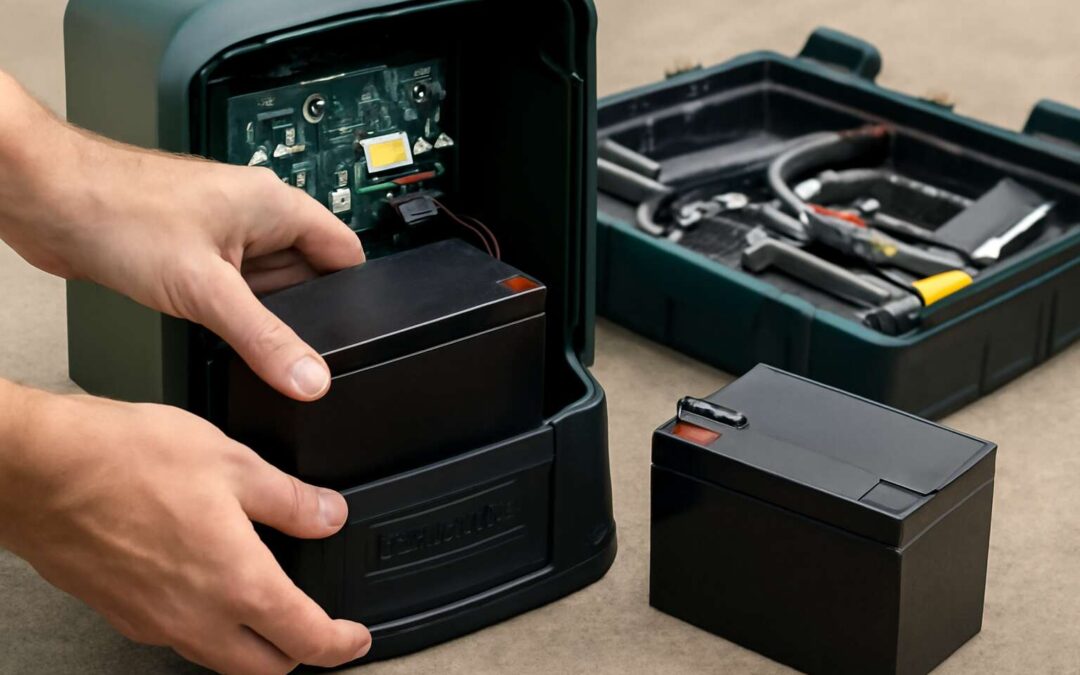
Assessing Centurion Gate Motor Battery Replacement Readiness
Identify your Centurion model and battery type
Gate access is the quiet heartbeat of a SA home; when it falters, life slows to a halt at the driveway. The moment a gate refuses to budge, the whole evening unravels. When exploring how to replace a centurion gate motor battery, the first step is readiness—before tools, before guesswork.
Assessing readiness begins with identifying your Centurion model and battery type. The correct pairing avoids guesswork and wasted service calls. Consider these signals:
- Model badge on the motor housing
- Battery label or type (sealed lead-acid, AGM, or gel)
- Control board compatibility and any remote/receiver notes
Beyond hardware, readiness asks about timing, environment, and the stubborn cadence of the daily commute. A thoughtful note: the battery matters, but so does the way the gate operates under load and heat.
A measured approach keeps the driveway calm and the home safer.
Evaluate battery health and voltage levels
South African driveways hum with the quiet certainty of a well-tuned Centurion gate—until a tired battery breaks the rhythm. Industry notes that roughly seven in ten gate service calls begin with battery fatigue under load. A seasoned technician says, “A gate is a heartbeat in metal,” and when the battery coughs, the rhythm falters.
Assessing readiness means reading battery health and voltage with calm eyes. A healthy 12V lead-acid should rest near 12.6V; anything lower signals discharge or aging. From here, understanding how to replace a centurion gate motor battery begins with these readings.
- Resting voltage around 12.6V for a healthy battery
- Age and physical condition: swelling or corrosion
- How the battery handles load during gate operation
- Maintenance history and last replacement date
These signals sketch a map of readiness, smoothing the path when the sun sets and the driveway calls.
Gather tools and safety gear for battery handling
A across South Africa’s sun-bright driveways, the Centurion gate keeps time with your day. Readiness begins before tools appear. This is how to replace a centurion gate motor battery—an art of preparation that keeps the driveway singing at dusk.
Gather tools and safety gear for battery handling with a calm mindset.
- Insulated gloves
- Eye protection
- Non-slip footwear
- Flat-head and Phillips screwdrivers
- Multimeter
With these ready, readiness meets the moment when power and patience greet the gate’s heartbeat.
Review compatibility: lead-acid vs lithium and capacity
Power is the quiet sentinel of your Centurion gate. The driveway becomes a stage for patience when a battery falters—and the right choice keeps it singing at dusk. If you’re wondering how to replace a centurion gate motor battery, this readiness lens helps you align the chemistry with your motor’s needs.
Start by assessing compatibility and capacity. Lead-acid and lithium chemistries behave differently in South Africa’s sun. Capacity, measured in amp-hours, guides how long a charge lasts. Match the new battery to the motor’s voltage and the system’s daily cycle to avoid cadence issues.
- Lead-acid suitability for older Centurion models
- Lithium options for lighter weight and longer cycle life
- Capacity (Ah) aligned with daily use
Readiness is a posture: the right chemistry, climate-aware capacity, and a budget for a longer-term solution. The gate waits, patient as dusk, listening for the whisper of power and your informed decision.
Understand local disposal regulations for old batteries
Power hides in the corners of every driveway. When the Centurion gate responds like clockwork, the moment feels almost ceremonial. I’ve learned readiness means pairing the right chemistry with your daily routine, so the gate stays steady and quiet as dusk settles!
Understand local disposal regulations for old batteries. Set aside a plan for recycling and safe handling—neighbourhood guidelines, drop-off points, and fees shape the choice you make.
- Understand local disposal regulations for old batteries
- Explore approved recyclers and take‑back schemes
When you decide how to proceed, you’ll see how to replace a centurion gate motor battery is less about brute force and more about disciplined readiness.
Preparing for a Gate Motor Battery Swap
Power down the system and disable automatic controls
In the quiet glow of dawn, a gate that won’t move can stall a morning. A gate is more than metal—it’s safety and welcome. If you’re curious how to replace a centurion gate motor battery, this pause matters.
Power down the system and disable automatic controls so nothing surprises you as you work. In South Africa’s rural settings, remote signals can jump back to life with wind or a stray ping, and that can spark near-misses. A calm baseline protects everyone nearby.
- Safety considerations around gate systems and bystanders
- Impact on daily routine and community access
- Moments of reflection before any work begins
Take a moment to breathe; a measured pause keeps the gate steady.
Access the battery compartment and document layout
In the quiet hour before sunrise, a gate that won’t awaken feels like a heartbeat stilled in steel. Across South Africa’s fences, every hinge whispers a story—yet preparation keeps the night from turning into chaos.
Access the battery compartment and document the layout, mapping where the power dwells and how the cells align. A quick sketch or photograph ensures the scene remains lucid when the moment arrives.
- Lighting and space for safe handling
- Clear labeling of terminals
- Non-metallic tools to avoid sparks
With these notes, the preparation around how to replace a centurion gate motor battery becomes more than routine—it is a measured ritual that guards access for the community and the quiet dawn.
Choose the correct replacement battery: voltage, capacity, and size
A quiet dawn over Johannesburg’s suburbs invites precision. In selecting how to replace a centurion gate motor battery, the trio of requirements guides every decision: voltage, capacity, and physical size. This isn’t a shot in the dark; it’s a careful alignment with the motor’s draw, the footprint it demands, and the constraints of space and mounting. The right choice keeps gates from stalling at the worst moment and preserves the rhythm of morning routines across South Africa.
- Voltage compatibility with the specific Centurion model
- Adequate capacity (Ah) to meet runtime needs
- Suitable physical size for mounting and cable routing
- Correct terminal type and polarity
- Battery chemistry, cycle life, and warranty alignment
- Temperature rating suitable for South Africa’s climate
These considerations shape a replacement that is safe, reliable, and quietly confident.
Consult your Centurion manual for model-specific steps
Morning routines hinge on a gate that opens on cue; a failed battery can turn a quiet suburb into a staccato pause. Preparing the swap starts with the Centurion manual, because model-specific steps keep you from guessing and safeguard the electronics. Consult how to replace a centurion gate motor battery for model-specific guidance!
- Assess mounting clearance and bracket condition to accommodate a swap.
- Plan cable routing and terminal layout to minimize strain and wear.
- Document the battery bay layout with photos for future reference.
In South Africa’s varied climate, a careful prep helps avoid morning delays. A calm, documented approach keeps the process safe, reliable, and respectful of the home’s rhythm.
Safety considerations and protective equipment before starting
In South Africa’s dawn, a stubborn gate can shave 15 minutes from a family’s morning ritual. Battery-related faults make up roughly 28% of gate failures, turning a quiet street into a staccato pause. I start with the Centurion manual, the compass that keeps the electronics singing.
Safety is a small spell you cast before touching metal. I assess the work zone, then gather protective gear to shield hands and eyes.
- gloves
- eye protection
- insulated footwear
South Africa’s varied climate demands a calm, documented approach that guards people and equipment against heat, dust, and moisture.
When you ask how to replace a centurion gate motor battery, the answer starts with quiet respect for the manual and the home’s rhythm. This mindful approach keeps the gateway safe, reliable, and ready to greet each dawn.
Check for warranty implications of self-service battery replacement
In South Africa, a stubborn gate can shave 15 minutes from a family’s morning ritual. Before you crack the case and reach for tools, consider how warranty terms shape every twist of the dial. For those wondering how to replace a centurion gate motor battery, start by reading the fine print—some manufacturers frown on home fixes even when the battery itself is replaceable. Time is precious!
Warranty implications vary by model and supplier. Some Centurion terms may require a licensed technician or approval for self-service replacements; others allow it if you use approved parts. Document the battery model, the date you opened the compartment, and any interactions with service channels.
To guard the family clock and the device, ask these pragmatic questions before lifting the lid:
- Is self-service replacement permitted under the warranty terms for your Centurion model?
- Does the battery need to be a Centurion-approved unit or an OEM equivalent?
- Will DIY handling affect labor coverage or post-warranty support?
Treat the documentation like a quiet covenant between you, your home, and the morning rhythm.
Step-by-step Battery Replacement Procedure for Centurion Gate Motors
Disconnect power and remove the old battery safely
The gate’s soft sigh at dusk can mask a ticking clock—one weak battery can turn reliability into rusted hesitation. A veteran Centurion tech once reminded me, “The heartbeat of the gate is the battery.” In South Africa, this truth resonates daily as security hinges on dependable power.
To address how to replace a centurion gate motor battery, the approach favors restraint and respect for the system. Disconnect power and remove the old battery safely, while preserving the integrity of the housing and cables. The replacement should be inspected for fit and general condition, then reconnected with attention to polarity and system balance. In this moment, patience matters more than force, because a rushed swap invites misalignment.
Afterward, observe the quiet reboot of the mechanism and log your notes for future reference. The room stays calm, and the gate remembers what it means to be trustworthy!
Label and disconnect wiring securely, noting terminal orientation
South African gate owners know the heart of security is a dependable battery. Battery-related faults drive weekend service calls and leave property owners counting sheep instead of signals. If you’re wondering how to replace a centurion gate motor battery, this measured approach keeps the system humming and your sanity intact.
Label and disconnect wiring securely, noting terminal orientation.
- Power down the gate system at the mains and disable automatic controls.
- Open the battery compartment, document lead positions, and disconnect the leads, ensuring proper polarity is preserved.
- Remove the old battery and inspect the housing and cables for wear or corrosion.
- Fit the replacement battery, connect leads with correct polarity, and reseal the compartment.
Power up and watch for a smooth reboot, then gently test the gate through its full range. The room stays calm, and the gate remembers what it means to be trustworthy.
Install the new battery and secure mountings
Power is the quiet oath behind every Centurion gate motor, the heartbeat of security guarding South Africa’s dawn routines. “Power is the quiet oath behind every click,” a veteran installer likes to remind us. For those curious how to replace a centurion gate motor battery, this step-by-step approach keeps the gate singing and nerves intact.
- Install the new battery into the housing, align terminals, and secure the mounting bracket to prevent movement.
- Reconnect leads, observe correct polarity, and tidy cables to avoid pinches or shorts.
- Seal the compartment, restore mains power, and verify indicators reflect normal operation.
- Test the gate through its full range, listening for smooth engagement and steady limits recognition.
With the battery secured and mountings robust, the Centurion gate stands as a silent sentinel, ready to greet the morning across South Africa with quiet reliability.
Reconnect power and perform a manual test of operation
“Power is the quiet oath behind every click,” a veteran installer reminds us. If you’re curious how to replace a centurion gate motor battery, the path is steady as a heartbeat—measured, deliberate, and safe, echoing across South Africa’s dawn.
- Reconnect power to the gate control and battery circuit, ensuring correct polarity and secure connections.
- Manually move the gate through its travel to confirm smooth motion and absence of obstructions.
- Observe the operation of limit switches and safety features as the mechanism settles into position.
- Return to normal mode, watching for stable auto-reverse and reliable sensor responses.
With power restored, the Centurion gate stands as a guardian, ready to greet the morning with quiet reliability and a touch of quiet magic.
Check for fault codes, LED indicators, and initial charging behavior
“Power is the quiet oath behind every click,” a veteran installer reminds us, and dawn over Cape Town lends the gate a patient breath. When you navigate how to replace a centurion gate motor battery, you move with measured reverence—an act that honours safety as much as function. The battery is not merely a component but a hinge of trust, a promise the guardian will wake with the city’s first light.
Consider a few high-level anchors before you proceed:
- Safety posture and environment awareness
- Secure housing and verified contact points
- Documentation for future serviceability
Post-installation Testing and Ongoing Maintenance
Run a full cycle test: open, close, and pause mid-cycle
If you’re asking how to replace a centurion gate motor battery, post-installation testing becomes the final quality check that prevents surprises. A careful review of operation, timing, and safety features helps protect your property and keeps the barrier functioning in South Africa’s varied climates.
Run a full cycle test: open, close, and pause mid-cycle to confirm smooth motion, sensor responses, and LED indicators. If anything seems off, revisit the diagnostics before finalizing the setup.
Ongoing maintenance is steady work that pays off. Regular checks of battery health, terminal cleanliness, and charger status extend life and reduce downtime. A simple diary of cycle counts and performance today helps you spot trends before problems arise.
Monitor battery charging and voltage over time
The gate settles into a quiet sentinel, watching over the property as the dusk thickens. After installation, post-installation testing becomes the final safeguard, a midnight audit of the system’s pulse. If you’re wondering how to replace a centurion gate motor battery, you’ll know the moment the power returns and the mechanism breathes again.
Monitor battery charging and voltage over time as South Africa’s varied climate tests the metal and patience of the system. In this shadowed routine, tiny fluctuations tell a story about age and resilience.
- Patterns in charging reveal aging and climate influence
- Voltage drift signals worn cells or loose connections
- Terminal wear hints at long service and endurance
Ongoing maintenance becomes a quiet stewardship, a diary of readings that keeps the barrier faithful through heat, dust, and rain. The gate remains a vigilant presence, ready to respond when called.
Establish a maintenance and replacement schedule
Post-installation testing acts as the gatekeeper of reliability, a quiet ritual that proves the system’s heartbeat. If you’re wondering how to replace a centurion gate motor battery, begin with a calm baseline: observe the gate’s response across several cycles, listen for hesitation, and note the initial charging behavior.
- Quarterly checks of terminal corrosion and cable wear
- Biannual test of auto-close features and manual override
- Annual battery health audit and replacement planning, including stock of spares
Maintaining the installation becomes a quiet stewardship through the seasons. A simple log of readings, temperature shifts, and cycle counts builds a history that guides future replacements, ensuring the barrier remains faithful in heat, dust, and rain.
Proper disposal of old batteries and environmental considerations
In the quiet hours after installation, post-installation testing serves as the gatekeeper of reliability. The gate’s response across several cycles acts as a heartbeat—swift, steady, true—and this check stands as armor for the days ahead.
If you’re wondering how to replace a centurion gate motor battery, begin with a calm baseline: observe the gate through a few open-close cycles, note any hesitation, and track the initial charging behavior. A simple log makes future checks predictable.
- Recycle spent batteries at accredited facilities in South Africa
- Comply with local disposal regulations and labeling
- Choose suppliers who offer take-back programs
Maintaining the installation is a ritual of care, shielding the barrier against heat, dust, and rain. This environmental mindfulness protects neighbours and nature alike, ensuring your gate remains faithful without leaving a toxic trail. May the ritual keep it singing!
Tips for extending battery life with regular checks
In the quiet hours after installation, a gate’s heart is a battery. “Keep the heart steady and the gate will sing,” a line we return to in every South African yard. If you’re curious how to replace a centurion gate motor battery, the glow of reliable power begins with post-installation care.
Post-installation testing is a ritual: observe the gate’s response, note any hesitation, and watch for the initial charging behavior. A simple log keeps memory honest.
- Maintain a quiet cadence of observations after each cycle
- Preserve clean and dry connections to protect longevity
- Document reflections to sustain a sense of continuity
Ongoing maintenance tips: shield the motor from heat, dust, and rain. Clean contacts, avoid shortcut charging, schedule replacements before failure—In South Africa, this care respects neighbours and keeps gates faithful.