
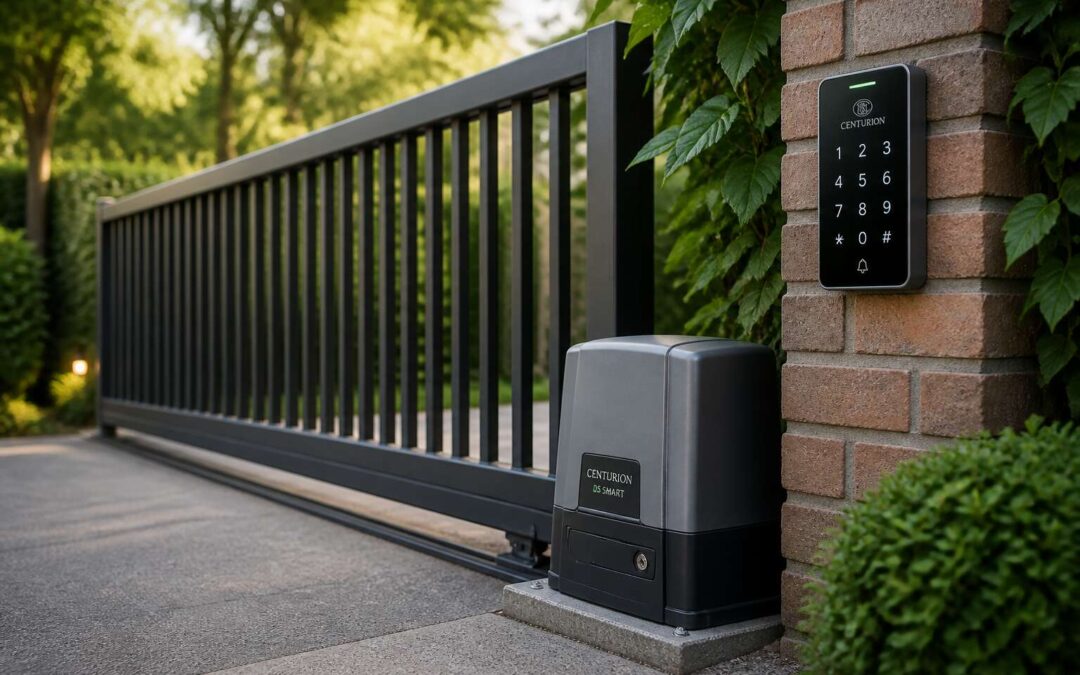
Unlocking Convenience: Modern Keypad Gate Systems
The Evolution of Residential Gate Access Control
We have all suffered the cold oil of a stuck gate. That experience is fading. The rise of the gate motor with keypad marks a shift in residential access. It began with remote controls, but remotes die or vanish. A keypad lives outdoors, ignores lost remotes, and grants entry through a personal digit sequence. Modern versions add features like timed access and alert logs. Consider what wired access offers:
- Code changes from a handheld unit
- Battery status monitoring
- Integration with intercom systems
Those extras matter in suburbs where utility failures force manual responses. The gate motor with keypad converts a frustrating daily ritual into a quiet push button moment. No more shouting from the car. No more waiting for a passerby to help. The evolution from clunky mechanical locks to digital entry reflects a broader desire for control. If you can punch in a number, you can enter your yard without theater.
How Wireless Keypads Simplify Daily Entry
Every morning, the same ritual plays out along Johannesburg’s quieter streets. Drivers stop, window down, reaching for a remote that isn’t there. A gate motor with keypad removes that stumble. You walk up, press four digits, and the gate swings open without drama.
The advantage is visible during load shedding. A wireless keypad runs on its own power source, so entry does not depend on the grid. No fumbling for keys in the dark. No waiting for the battery to revive.
Consider what this changes for a busy household:
- Children returning from school can enter without carrying a remote.
- Staff or regular visitors receive their own code, revocable at any time.
- The system logs activity, so you know who came through and when.
A gate motor with keypad turns a daily friction point into the calmest part of your morning.
Keypad Technology vs. Traditional Remote Controls
Every household knows the ritual of patting down pockets for the remote. Then comes the drive to the office with the spare handset on the passenger seat, an accident waiting to happen. A gate motor with keypad shifts that anxiety to the curb. The access point becomes about knowledge, not possession.
Keypad technology offers a distinct advantage over the plastic fob in your cup holder. The handset is a physical object, prone to loss, theft, and battery death. The keypad is a fixed point, always present, always ready. It removes the variable of human forgetfulness from the equation.
Consider how the two compare when managing access. The handset forces you to hand over physical hardware to anyone you trust. The keypad allows you to issue a sequence of digits, not a tangible asset.
– A code can be given over the phone, instantly.
– A code can be deleted when a contractor finishes the job.
– A code cannot be dropped in a puddle or left at the office.
The traditional remote locks you into a single point of failure. A gate motor with keypad disperses that risk across the household, giving every user a unique identifier. You trade the scramble for a device for the calm certainty of a number you keep in your head. It is a quieter, more deliberate way to control the perimeter.
Weather-Resistant Designs for Outdoor Durability
The South African sun is unrelenting. It destroys cheap plastics within a single summer. A gate motor with keypad sits in that same harsh environment, exposed to UV rays, driving rain, and coastal salt. Engineering has responded. Modern keypad gate systems use UV stabilized polycarbonate housings and sealed membrane buttons. These materials resist cracking and yellowing. Internal circuit boards receive conformal coatings against humidity. These keypads now operate reliably through Highveld thunderstorms and Durban’s humid air alike!
Consider the specific protections built into quality units:
- IP65 or higher water and dust ratings
- Corrosion resistant backplates for coastal installations
- Thermal management for extreme temperature swings
These features matter because a keypad cannot be carried indoors. It endures every season while delivering the same clean keystroke response. That resilience separates a gate motor with keypad from disposable gadgets. It is built for permanence.
Security Benefits of Keypad-Controlled Gate Automation
Restricting Unauthorized Access with Advanced PIN Codes
Nearly 80% of South African burglaries occur through the access point of a property. A gate motor with keypad offers a genuine deterrent against these opportunistic intrusions. A remote control can be stolen or cloned, but a PIN code remains in your head. This difference defines modern perimeter security.
Forget fumbling for a remote while carrying groceries. Punching in a sequence offers silent, discreet entry. The system reacts only to the correct input, providing a clear barrier against joyriders or casual thieves. It is a simple authentication method that has proven its worth in high-crime areas.
This security setup grants you control without sacrificing convenience. Consider the specific advantages:
– Codes can be changed instantly if a guest or contractor leaves on bad terms.
– Multiple unique codes track who enters and when, offering a clear audit trail.
– No physical key to lose, break, or duplicate without your knowledge.
– The system denies entry to anyone without the correct sequence.
The benefit is a tangible layer of protection that gives you peace of mind. Even if someone watches you from the street, they cannot replicate your finger movements on the keypad. They get nothing but a locked gate. This sense of control is a powerful asset for any homeowner in South Africa.
Audit Trails and Activity Logging for Enhanced Oversight
The trail of a break-in is often invisible. No forced door, no broken window. The entry point was simply opened. This is why oversight matters as much as the lock itself. A gate motor with keypad does more than open and close. It records. That record is your first line of defense and your best piece of evidence.
The system logs every interaction with your perimeter. You know exactly which code granted access and when. This information is invaluable for managing staff, contractors, or family members. The data is stored securely and can be reviewed at any time. It gives you a clear picture of daily activity at your boundary without you having to be there. The audit trail is silent, but it is always on duty.
When you control the codes, you control the access points. You can issue a unique code for a gardener and revoke it the moment they leave your service. The log confirms the separation. This level of detail deters internal theft and collusion. It provides a factual account of who was on your property, shutting down suspicion and guesswork.
The system documents key details for each entry event:
– The exact date and time of activation.
– The specific code or credential used.
– The overall duration of the gate’s operation.
– A history of any failed attempts to gain entry.
Failed attempts are just as telling as successful ones. A series of wrong codes at 2 AM is a warning sign. You can see it in the log before it becomes a problem. This proactive insight transforms a simple keypad from a convenience tool into a security device. You are not just locking the gate; you are watching it. That comprehensive view is the core benefit of a modern gate motor with keypad.
Seamless Integration with Home Security Ecosystems
Most security systems wait for a breach before they react. The keypad on your gate can act long before that. It is the quiet gateway between the automated perimeter and the alarm, camera, and lighting systems that protect your home. When someone enters a code, the gate motor with keypad confirms the event to your central hub, triggering a cascade of pre-programmed responses without a single command from you.
The result is a seamless ecosystem where every component supports the others. Consider what happens when a visitor arrives after dark. The keypad verifies the code, the motor opens the gate, and the floodlights illuminate the path automatically. Your cameras begin recording. Your family is informed through your smartphone. The entrance becomes a managed event, not a mystery. This integration turns your property into a single, cohesive line of defense rather than a collection of separate parts.
– The system can arm or disarm your internal alarm when you enter your unique code.
– You can program the gate to alert you if it is activated outside of your set hours.
– The motor can be linked to your smart lighting, so entry always happens in well-lit conditions.
This shifts your perspective on security. You stop thinking about individual locks and start seeing the entire property as a responsive organism. The gate motor with keypad is the first point of contact, the sensor that tells the rest of your home that an event is underway. It is not simply a door you open; it is the starting point of a coordinated response that works while you sleep, work, or travel. That silent, automatic coordination is the true value of modern gate automation.
Tamper Alerts and Anti-Pry Mechanisms
Security breeches rarely begin with a dramatic smash and grab. They start with a quiet, probing touch. Every gate motor with keypad anticipates this. The manufacturers have designed these entry points to be as vigilant as the most suspicious doorman, watching for the telltale signs of interference before a would be intruder has even completed their first attempt.
Tamper alerts operate as an immediate, silent distress signal. When someone tries to force the housing, pry the screen, or disconnect the power to disable the system, the unit detects the physical intrusion. It then relays a notification straight to your smartphone. This differs from a standard alarm, which only fires after the perimeter has been breached. The keypad gives you the advantage of responding to the threat while the gate is still closed and the property remains secure.
The anti-pry mechanisms deserve their own moment of appreciation. A keypad that is easily removed from its mounting becomes a vulnerability. Modern units use recessed screws and break away brackets. If enough torque is applied, the faceplate detaches but the internal electronics remain embedded in the wall, rendering the stolen piece useless. This forces the intruder to deal with a dead interface, while you are already watching them on your camera feed. Consider these built in defenses:
- The unit enters a lockdown mode after multiple incorrect code attempts.
- Internal sensors detect drilling or sawing and trigger an immediate high decibel alarm.
- Physical disconnection from the motor unit sends a specific fault code to your app, distinguishing between a power cut and sabotage.
These layers of physical resistance change the calculus for a burglar. A gate motor with keypad that appears difficult to compromise will often be skipped in favor of a softer target. The sheer presence of the anti-tamper hardware, like hardened steel backplates and sealed electronics, communicates that this property is not an easy score. You are not merely installing a convenience feature; you are installing a deterrent that works on sight alone.
Backup Power Solutions for Uninterrupted Protection
Load shedding interrupts more than your evening routine. In South Africa, a gate motor with keypad that depends on mains power becomes useless precisely when you need it most. Backup power solutions are not optional. They determine whether your property stays secured or becomes vulnerable during an outage.
The keypad keeps functioning when the electricity drops. You avoid the risk of manually opening the gate. Consider these backup configurations:
- Deep cycle batteries sized for twenty or more open close cycles
- Solar trickle chargers that maintain battery health without grid power
- Dual battery systems that switch over seamlessly
Each option preserves the security protocols of your gate motor with keypad. Activity logs keep recording, tamper alerts remain active, and access codes still authenticate. Uninterrupted protection means your automated gate stays automated. Even when the neighbourhood lights go dark, the entry point remains locked and fully controlled.
Choosing the Right Keypad Gate Motor for Your Property
Understanding Drive Types: Sliding, Swing, and Overhead
Some say a gate is only as good as its motor. For a property in South Africa, that statement carries weight, especially when you consider the daily rhythm of life. A gate motor with keypad is a significant investment, so the first decision is about the physical mechanics of your gate itself.
The kind of gate you have dictates the motor you need. Sliding gates are common for their space saving design. Swing gates, with their wide opening arcs, require a stronger motor to handle the leverage. Overhead motors, often mounted on the post, are a sleek alternative. Each type has specific installation requirements and power needs.
When you pair these mechanics with a wireless keypad, the convenience multiplies. You are not just opening a gate; you are activating a system. The keypad becomes the control point for a motor that must handle the weight and frequency of your gate’s movement. It is a partnership between the digital command and the physical labour of the machine.
Power Ratings and Heavy-Duty Performance Considerations
Not every gate motor with keypad is engineered for the same burden. The unspoken contract between you and your gate is a promise of daily performance, and that performance begins with a simple number: the power rating. Ignoring this specification is the fastest route to a motor that strains, whines, and eventually surrenders to the sheer mass of steel it is meant to command.
Sliding gates, for instance, rely on a high pulling force measured in newton-meters. A heavy, double-layer gate on a windy Highveld property demands a motor capable of a continuous duty cycle without overheating. Swing gates, by contrast, require immense surge capacity to break the inertia of a static leaf, especially after a day of rain has swollen the hinges.
The keypad is your control, the brain that receives the command, but the motor must provide the brawn. A surge capacity that is too low will result in the gate stalling mid-arc, leaving the access point exposed. A duty cycle that is too short will cause the thermal overload protection to trip during peak traffic times, locking you out and requiring a manual override to gain entry. When you select a unit, consider both the weight and the frequency of use.
– Duty Cycle: Most standard residential motors run at a 30% duty cycle. For property access that handles high traffic, look for a unit rated for continuous operation or 50% or higher.
– Motor Class: The class indicates the operational lifespan. A class higher motor will have superior brush quality and insulation for the constant starting and stopping of gate movements.
– Torque Output: Match the newton-meter rating to the gate’s weight and the wheel resistance. Always add a margin for adverse weather conditions and older tracks.
Keypad Programming Features and Customizable User Codes
Choosing the right gate motor with keypad starts with how the keypad itself manages access codes. Many residential systems offer a single master PIN, but the better units provide multiple user codes with independent activation schedules. For a South African home, where staff and contractors change frequently, this flexibility matters more than you might expect.
A useful feature set often includes:
– Temporary codes that self destruct after a set number of uses
– Individual code deletion without wiping the entire memory
– An audible confirmation beep to signal successful entry
Customizable user codes let you grant access for a delivery driver only on a Tuesday, then revoke it with a few presses. The programming sequence on a reliable gate motor with keypad should require no tools, just a simple toggle switch or a protected menu. If the keypad is exposed to the Highveld sun, check that the buttons remain responsive and the codes remain stored through power fluctuations. That level of control turns a basic entry point into a quiet, precise system.
Battery Backup and Solar Compatibility Options
Eskom’s load shedding schedule is no longer an event. It is a permanent condition. For a gate motor with keypad, this means a dead battery is not a question of “if” but “when.” The keypad itself draws a high current spike the moment you press a digit, sending its signal to the control board. If the battery is weak, that spike causes a voltage drop that resets the entire unit, leaving you locked out with a freshly charged keypad that refuses to respond.
Your choice of battery chemistry determines how this plays out. Sealed lead acid units are common, but they degrade fast in high heat and require a trickle charge that often fails during power outages. Lithium iron phosphate batteries, usually marketed as drop-in replacements, hold their voltage curve much flatter. A gate motor with keypad using this setup will maintain the same response speed on day 200 as on day one. The critical detail is the charging algorithm. A solar compatible controller must be separate from the motor logic board, otherwise each overcast day throttles the charge and corrupts the keypad memory.
– Verify the controller supports a three stage charge cycle for lithium cells
– Confirm the solar panel voltage matches the battery bank, 12V panels do not work well with 24V motors
– Check the keypad wiring harness for a dedicated power filter capacitor
South African sunlight is aggressive, but it is reliable. A well sized 80W panel can top up a 7Ah battery in four hours of direct sun. The problem is the wiring run from the panel to the motor. Long cables lose voltage, and a gate motor with keypad that senses a low input will lock out the keypad to protect the logic board. Keep the solar regulator within one meter of the battery and use heavy gauge cable for the last stretch. That simple fix prevents the most common cause of keypad ghost presses and intermittent failures.
Automation Standards and Safety Certifications
South Africa’s gate motor market remains largely unregulated, yet the liability sits squarely on the property owner. When you choose a gate motor with keypad, the certification label matters more than the brand sticker. Look for SABS approval and the SANS 60335-2-103 mark, the national standard governing automated gate safety.
Entrapment protection is the first thing I check on any unit. The compliance list is short but unforgiving!
- Force limiting sensors that stop the gate on impact
- Photocell inputs for reversing on obstruction
- Mechanical emergency release during power failure
Without these, a gate motor with keypad is a liability waiting for a child, a pet, or a careless visitor. The keypad itself should carry an IP65 rating, because rain in Gauteng is just as relentless as load shedding.
Smartphone Connectivity and Remote Management Features
That grey box with the number pad is no longer the extent of your access control. It has become a sentinel with a smartphone addiction. The modern gate motor with keypad now serves as the physical key and the digital bridge, allowing you to manage your perimeter from a meeting in Sandton or a holiday in Cape Town. This convergence of hardware and software is redefining what convenience means for a South African homeowner, moving beyond the simple beep of an accepted code.
Smartphone connectivity transforms the gate motor with keypad from a passive receptor of PINs into an active participant in your security network. The keypad still handles the physical entry, but the app provides the oversight. You can generate a temporary access code for a gardener while you are at work, revoke it the moment they leave, and receive a push notification the instant that code is used. It is about control, not just access.
The remote management features available today are remarkably granular. Consider what your current system lacks:
– Real-time status checks to confirm your gate is fully closed and secured
– Activity timestamps that log every entry, PIN used, and attempted override
– Two-way audio to speak with a delivery driver without opening the door
– Geofencing alerts that notify you when a vehicle approaches your driveway
These tools deliver the same data you would expect from a corporate security suite, but for your home. The keypad remains your primary interface, but the smartphone becomes your command console. This is a critical consideration if your property has multiple entry points or staff requiring staggered access. A gate motor with keypad that offers this dual interface ensures you are never blind to who is coming and going, regardless of your physical location. It turns your gate from a barrier into a source of information.
Installation and Setup: Best Practices for Keypad Gate Motors
Pre-Installation Site Survey and Electrical Requirements
The threshold of permanence begins long before the keypad is mounted. A gate motor with keypad demands a survey of the terrain it will command. Concrete footings, gate leaf weight, and the arc of travel all dictate the physical stress placed upon the mechanism. Measure the clearances precisely. A single miscalculation in the swing radius creates chronic strain on the gears.
Electrical preparation is the silent foundation. Dedicated circuits prevent interference from household appliances that might surge during operation. Underground cabling must be sleeved in conduit to deter rodents and ground moisture. The voltage drop over long distances will cripple performance, so verify the conductor gauge against the distance from the main supply.
The installation process requires a methodical sequence:
1. Verify the incoming supply voltage matches the motor’s rating.
2. Assess the current draw during a full open and close cycle.
3. Confirm the backup battery capacity for power failure situations.
4. Ensure a proper earth leakage breaker is installed for safety.
The environment dictates the hardware. Coastal regions with saline air require stainless steel fixings to prevent corrosion. Inland dust requires sealed housings for the control board. A gate motor with keypad is only as reliable as the integrity of its installation. The keypad’s signal strength and the motor’s response hinge on this meticulous groundwork.
Mounting the Motor Unit and Aligning the Keypad
Mounting a gate motor with keypad on a skewed bracket will grind gears for years, and cheap bubble levels will betray you. Use a proper spirit level and steel shims, because the keypad and motor fight each other when the geometry is off.
Position the keypad where a user can actually face it. In South Africa, afternoon sun turns backlit keys into useless smudges, so angle it away from direct glare. The motor unit and keypad are one system, not two separate parts.
- Torque spec is a number, not a feeling.
- Drainage holes belong in the housing base, never the top.
- The manual release lever gets tested before the cover closes.
Keep the keypad clear of the gate’s swing arc, unless you enjoy entering a PIN while a steel leaf backs into your elbow. Mounting a gate motor with keypad is patient geometry, and patience pays off.
Wiring Connections and Signal Configuration
The wiring of a gate motor with keypad deserves the same respect as the gate’s steelwork. A loose neutral on the keypad’s common rail will produce intermittent faults that appear only at night. In South Africa, where surge events arrive with summer storms, fit a dedicated surge arrester between the control board and the mains supply.
Signal configuration is less about pressing buttons and more about matching voltage outputs. Many installers assume all keypads use the same electrical signals. They do not. Some keypads deliver a momentary pulse, others require a timed open command. Check the motor’s input specifications before pairing.
- Run signal wires away from the motor’s power cables.
- Terminate shielding at one end only.
- Test the signal path before the gate is connected.
These steps prevent the most common failures on a South African property. A gate motor with keypad that opens halfway is usually a wiring fault, not a software issue.
Programming Master Codes and Managing Temporary Access
There is a quiet terror in handing over a stranger’s access to your perimeter. The PIN code is the only thing standing between your driveway and an empty house, yet most homeowners never configure it past the factory default.
Setting the master code on your gate motor with keypad is a single moment of focus. You must enter programming mode with the factory sequence, input your new four to eight digit code, and confirm it without hesitation. This code defines the hierarchy. It grants you the power to add users, delete user codes, and change operational parameters.
Temporary access requires a different strategy. If a domestic worker or a contractor needs entry for a week, you do not give them the master code. You create a separate user PIN with a time window. Some control boards offer a time-limited feature that automatically deactivates the code after the set period.
1. Access the programming menu using the master code.
2. Select the user management option.
3. Input the temporary PIN and assign the validity period.
This approach limits exposure. The service provider can open the gate motor with keypad during business hours, and nothing more. When the task is complete, the code expires without you needing to reconfigure the system.
The real danger is never the hardware. It is the sloppy code management that happens after installation. Changing the master code every six months, especially after staff turnover, keeps the control where it belongs: in your hands alone. South African security dynamics demand this level of paranoia, and rightly so.
Maintenance and Troubleshooting for Long-Lasting Performance
Routine Cleaning and Lubrication of Moving Parts
Maintaining a gate motor with keypad is not merely a chore, it is a dialogue with a machine that secures your private realm. The mechanical soul of the system, the worm drive and guide rails, bear the brunt of daily friction. Regular lubrication with a lithium-based grease prevents premature wear and keeps the motor’s strain low. Clean the track and rollers monthly to remove debris that causes resistance.
Troubleshooting often reveals silent culprits rather than major failures. A sluggish gate is frequently the result of corroded battery terminals or a failing transformer. Listen for unusual grinding, which indicates a misaligned chain or belt. For keypad-specific issues, check for moisture ingress behind the numbers, even in weather-resistant units.
The most common failure points are not complex, but they are often overlooked:
1. Loose limit switch mounts that alter the stopping position.
2. A drained backup battery that impairs system memory.
3. Small insects nesting within the keypad housing.
4. Fading PIN entry due to worn contact pads.
When the gate motor with keypad refuses to respond, verify the power supply first, then listen for a click from the motor’s relay. A silent motor points to a control board fault, while a humming motor suggests a seized mechanical component. Addressing these issues promptly preserves the entire access control ecosystem. The longevity of your gate motor with keypad depends on this consistent attention to its physical and electrical health, ensuring the code you enter remains the key to a smoothly operating entrance.
Keypad Battery Replacement and Power Management
Every gate motor with keypad depends on a power source most users ignore. The keypad’s internal battery preserves your PIN codes and system memory, yet no one considers it until the keypad refuses to accept a single digit.
Replace that battery every eighteen months. Use the exact cell type specified in the manual.
- Corroded terminals cause intermittent keypad failures.
- A dim backlight signals a weakening cell.
- Voltage drops worsen during cold nights.
Power management extends beyond the keypad. The motor’s backup battery demands the same care. I once traced a stalled gate to a transformer running at reduced capacity, not a mechanical fault. Check the charging voltage with a multimeter before dismantling anything. In South African conditions, heat and dust accelerate battery deterioration, so inspect terminals quarterly.
Diagnosing Common Error Codes and Sensor Faults
Error codes on a gate motor with keypad often point to sensor misalignment rather than a dead component. The infrared beam across the gate can drift after a heavy storm or a vehicle bump. That false trigger stalls the motor and flashes a code most owners misread as a mechanical fault.
Check the sensor brackets first. Loose screws, spider webs, or direct sunlight can interfere with the signal. Clean the lenses and verify the alignment using the indicator LED. If the error persists, inspect the limit switches for corrosion on the contact terminals.
- Measure the voltage at the control board terminals.
- Test the sensor output with the gate in both open and closed positions.
- Review the log for repeated fault patterns.
A gate motor with keypad that resets itself repeatedly usually has a wiring issue, often a frayed cable pinched inside the conduit. Rodent damage is common in South African installations. Trace the full cable run before replacing the motor.
Weatherproofing Tips for Coastal and Extreme Climates
Coastal air carries salt that eats into terminals and brackets. A gate motor with keypad in Durban or Cape Town needs more than occasional wiping. The salt film accelerates corrosion on the control board and keypad contacts. Apply a silicone protectant to the PCB and terminals every three months.
Extreme heat and dust create their own problems. The rubber seals around the keypad dry out and crack. Check them each season! Replace any seal that has lost flexibility. For coastal installations, rinse the motor housing with fresh water monthly. Do not use a pressure washer on the unit, it forces moisture into the electronics.
- Tighten cable gland nuts twice a year.
- Reapply dielectric grease to battery terminals.
- Verify the housing lid seals fully.
These actions extend the working life of your gate motor with keypad.
When to Call a Professional Gate Motor Technician
Professional maintenance can extend the life of your system, but there comes a point when a trained eye is essential. While cleaning contacts and tightening connections are sensible homeowner tasks, the internal electronics of a gate motor with keypad are sensitive. A multimeter in the hands of an amateur can cause more harm than good. Safety is the primary concern with gate automation, especially where heavy gates and high voltage are involved.
Several situations demand the skills of a certified technician. If your gate motor with keypad responds slowly or makes unusual grinding sounds, do not ignore it. This often indicates a mechanical fault in the drive train, not a simple programming error. Similarly, persistent error codes that return after a reset point to a deeper electrical issue. Attempting to bypass safety sensors, like the photocells, to get the gate moving again is a dangerous practice. It removes a critical safety layer designed to prevent accidents. A professional will diagnose the root cause instead of applying a temporary fix.
Consider these critical scenarios:
– The motor unit shows signs of physical damage or overheating.
– The keypad becomes unresponsive after a lightning storm, suggesting PCB damage.
– You require a full system diagnosis after repeated power surges.
– The gate stops midway and reverses without an obvious obstruction.
Attempting complex repairs on a gate motor with keypad often voids the manufacturer’s warranty. Technicians have access to diagnostic software and genuine replacement parts. They also understand the specific load calculations for sliding versus swing gates. For South African homeowners, dealing with load shedding adds another variable. A professional ensures the backup battery system integrates correctly with the motor’s logic board. This prevents damage when the power fluctuates. Relying on an expert for these intricate tasks ensures your access system remains reliable and safe for your family. A small investment in a service call prevents a costly full unit replacement later.