
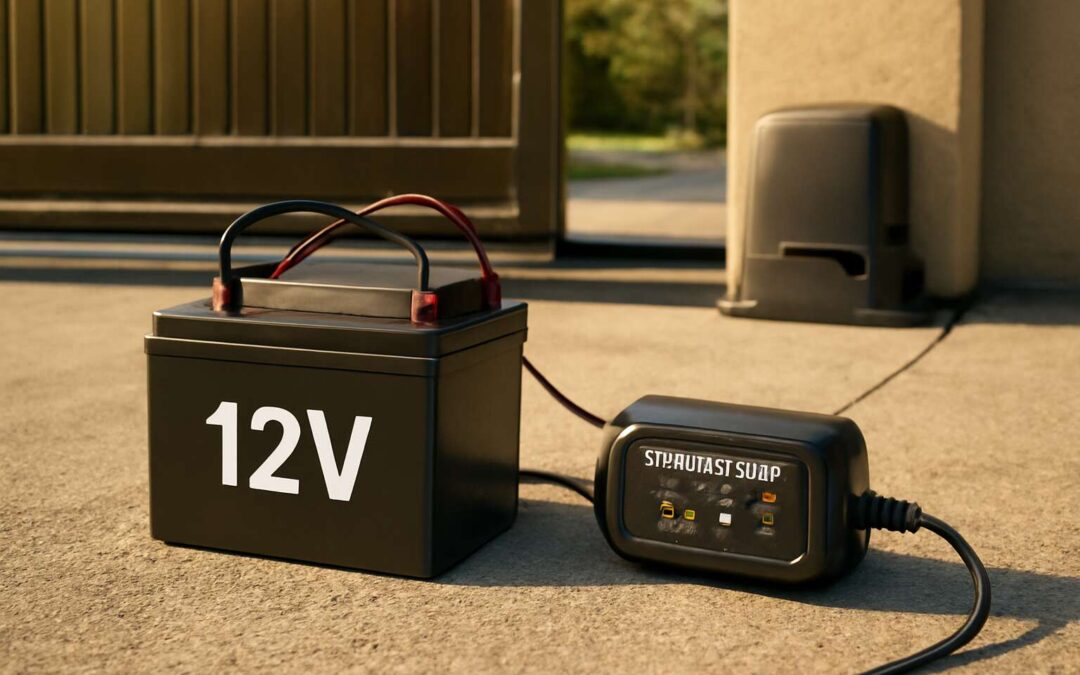
Understanding gate motor batteries and charging basics
What a gate motor battery powers and typical voltage
In South Africa, a well-charged gate motor is the quiet heartbeat of a home—keeping driveways secure and mornings moving. A tired battery turns smooth access into delays. Understanding the battery that powers your gate is the first step toward reliable convenience. I’ve seen the difference a steady charge makes.
- Motor drive and gears
- Control board and safety interlocks
- Remote receiver and accessories
Most residential systems run on 12V sealed lead-acid or AGM batteries; some larger setups use 24V. The question can you charge a gate motor battery is commonly asked, and the response emphasizes compatibility with deep-cycle or starter batteries and adherence to the battery’s specifications. In South Africa’s heat, temperature effects on battery health are a consideration.
Why charging your gate motor battery matters for reliability
“A healthy battery is the quiet heartbeat of a secure home.” That truth lands hard when the gate opens without a sigh and greets the day. In South Africa, reliability isn’t a luxury—it’s morning’s small, essential mercy.
Most residential systems run on 12V sealed lead-acid or AGM batteries; some larger setups use 24V. The question can you charge a gate motor battery often arises, and the answer hinges on compatibility with deep-cycle or starter batteries and adherence to specifications. In our climate, heat accelerates wear and reduces capacity, so keeping a steady charge matters.
Consider these factors:
- Battery type and age
- Charger compatibility
- Ambient temperature
These reflections shape reliability as a daily reality rather than a gadget.
Common battery types used in gate motors
A welcoming sunrise deserves a gate that obeys—without drama. In South Africa, battery health is the quiet guarantor of that morning ease.
Most residential gate motors sit on 12V sealed lead-acid or AGM packs; larger installations run 24V. The question can you charge a gate motor battery hinges on chemistry, charger compatibility and system voltage. In our climate, heat accelerates wear, so the charging relationship must be timely and respectful of the battery’s temperament.
Consider these touchstones:
- Battery type and age
- Charger compatibility
- Ambient temperature
Handled with the right care, the gate remains a courteous sentinel rather than a whining guest at dawn.
Charging options and compatibility
Built in chargers on gate motors: how they work
Uptime is king in South Africa’s gated neighborhoods, where a quiet hinge is worth its weight in morning coffee. A seasoned installer jokes that a healthy battery is the gate’s quiet hero—unseen until it isn’t.
Charging options and compatibility hinge on built-in chargers and smart power management. Built-in chargers on gate motors handle top-ups and talk to the controller to avoid overcharging. Readers ask: can you charge a gate motor battery without removing the unit? The answer rests on voltage range and battery chemistry (sealed lead-acid, AGM, or lithium). In SA, 12V and 24V systems are common, with compatibility guided by heat sensing, charge cycles, and shutdown thresholds.
- Voltage match (12V/24V)
- Battery chemistry recognition (lead-acid, AGM, lithium)
- Monitoring indicators and fault protection
Ultimately, the charm lies in how chargers meld with a gate’s ecosystem. A well-matched setup minimizes downtime and respects local power realities.
Using a separate charger: safety and compatibility tips
Charging options extend beyond the built-in heart of a gate motor. In many SA homes, a separate charger is a quiet ally—especially during outages. So, can you charge a gate motor battery with a standalone unit? The answer hinges on voltage range and the battery chemistry at play.
- Voltage alignment: use 12V or 24V to match the system perfectly.
- Battery chemistry: sealed lead-acid, AGM, or lithium—each profile demands a different charging rhythm.
- Current and protection: choose a charger with appropriate current and reliable overcharge safeguards.
- Safety and environment: ensure good ventilation, clean connections, and dry surroundings.
Together, these factors shape a safe, reliable link between power and gate motion, aligning with South Africa’s power realities rather than fighting against them.
Solar charging considerations for automated gates
Charging options and compatibility for gate motors go beyond the built-in charger. When you ask can you charge a gate motor battery, the answer hinges on voltage, battery chemistry, and the charging rhythm your system tolerates. In South Africa, smart, solar-friendly charging keeps gates moving during outages and after dusk.
- 12V or 24V alignment to match your motor
- Sealed lead-acid, AGM, or lithium profiles demand different charging profiles
- Chargers with appropriate current and robust overcharge protection
Safety and environment remain the tie-breakers: ensure ventilation, clean connections, and dry surroundings. Solar integration shines when the system respects peak sun hours and your property’s specific conditions, weaving reliability into daily gate motion without fuss.
Battery chemistry compatibility and charging profiles
Can you charge a gate motor battery? The answer hinges on voltage, chemistry, and the rhythm your system tolerates. In South Africa, smart, solar-friendly charging keeps gates moving through outages and after dusk, turning a simple hinge into steadfast reliability.
Choose your voltage wisely—12V or 24V—to align with the motor’s heartbeat. Battery chemistry matters too: sealed lead-acid, AGM, or lithium profiles demand distinct charging profiles and safeguards.
- 12V vs 24V alignment to your motor
- Battery chemistry: sealed lead-acid, AGM, lithium and their charging profiles
- Charger features: current limits and robust overcharge protection
Safety and environment remain tie-breakers: ensure ventilation, clean connections, and dry surroundings. Solar integration shines when peak sun hours are respected, weaving reliability into daily gate motion across diverse South African properties. Readers still ask: can you charge a gate motor battery in off-grid setups?
Safety and best practices
Personal protective equipment and handling when charging
‘Safety first’ isn’t cliché when a charged gate motor battery can spark more than confidence. In South Africa, unreliable power and heat waves stress charging routines. So, can you charge a gate motor battery safely? The answer sits at the boundary of care and consequence.
Personal protective equipment and handling form the first line of defense. Even with built-in or external chargers, respectful distance from terminals and awareness of battery chemistry matter more than bravado.
- insulated gloves meeting local electrical standards
- safety goggles or a face shield
- non-slip, closed-toe footwear
- protective clothing and sleeves
- facility-appropriate spill kit and ventilation awareness
Handle with restraint: inspect for damage, avoid heat, and keep jewelry away from terminals. If anything seems off, pause and consult the manufacturer’s guidance rather than improvising.
Electrical safety: connectors, polarity, and fusing
Across South Africa, erratic power draws safety into sharp relief. “Safety isn’t a slogan; it’s a circuit you respect.” can you charge a gate motor battery safely? The answer sits at the boundary of care and consequence, where a momentary misstep can ripple into downtime and risk. Emphasizing proper connectors, correct polarity, and reliable fusing keeps the system honest rather than reckless.
- Choose connectors rated for the battery’s current and environmental conditions; clean, dry terminals prevent unwanted resistance.
- Always verify polarity before linking, as reversed connections can immediately damage the charger and the motor.
- Incorporate a fuse or inline protection device close to the battery to guard against short circuits.
Keep cables away from heat sources, inspect for wear, and avoid improvised fixes. If anything looks damaged, pause and consult the manufacturer rather than guessing.
Preventing overcharging and overheating
In a country where power reliability can dip without warning, guarding a gate motor battery is about steady care as much as sturdy hardware. So, can you charge a gate motor battery safely? The answer hinges on discipline, not guesswork—heat, corrosion, and faulty connections are real risks that ripple through a gate’s function.
Safety relies on proper connectors, correct polarity, and dependable fusing, with smart chargers that auto-regulate voltage and current to curb overheating.
Consider these high-level safeguards:
- Smart charging with automatic shut-off and temperature sensing
- Clean, compliant connections and healthy cables
- Ventilation and ambient heat awareness to prevent heat buildup
Respecting the battery’s chemistry and charging profile keeps downtime at bay and protects the investment.
Proper storage and maintenance to extend battery life
South Africa’s power reliability can dip without warning, turning a simple gate into a barrier at the worst moment. A gate motor battery demands respect; neglect invites downtime, corrosion, and costly outages. “Reliability isn’t a feature—it’s a necessity,” a seasoned technician reminds us, and that warning lands with a clang when a gate stalls at dawn!
- Smart charging with auto-regulation and temperature sensing
- Clean, compliant connections and healthy cables
- Ventilation and ambient heat awareness to prevent heat buildup
Proper storage and regular maintenance extend battery life, guarding against performance fade and unexpected failure. So, can you charge a gate motor battery safely? The answer rests on discipline—respect the chemistry, preserve connections, and maintain an environment that minimizes stress on the battery.
Troubleshooting and diagnostics
Symptoms of a dead or failing battery
Across South Africa’s busy mornings, a gate that won’t move can freeze the moment—and the battery is often the quiet culprit behind that stubborn delay.
Symptoms arrive like a slow hum: the motor ticks but the gate lags, lights dim, or a mid-arc stall betrays a fading charge. Evidence such as a swollen case or corroded terminals adds a warning note.
In diagnostics, I listen for patterns rather than excuses:
- Voltage drops under load or when movement is requested
- Physical signs: bulging, leakage, or terminal corrosion
- Unusual heat or a battery that cannot hold charge after rest
If you’re wondering can you charge a gate motor battery, the answer rests on safety, chemistry, and proper inspection. These signals should steer professional assessment to prevent downtime and hazard.
Troubleshooting when the charger trips or won’t start
Across SA, a gate that won’t budge in the morning rush costs more than time—it strains routines and security. In fact, across our market, about 40% of interruptions trace to battery health. When the charger trips or the motor stalls, you’re seeing a diagnostic signal. If you’re asking, can you charge a gate motor battery, the answer rests on safety, chemistry, and careful inspection.
- Charger indicators flicker or breaker trips as the system tries to engage
- Unusual warmth around the unit or battery during attempts to move
- Connections show corrosion or looseness that disrupts current flow
In diagnostics, patterns matter more than bravado. Repeated signs, odd warmth, or unfamiliar smells point to the need for a professional assessment to prevent downtime and hazard.
Interpreting fault codes related to battery charging on gate motors
Fault codes are gate motors’ weather vanes, signaling the health of the charging path. When the gate won’t budge and the battery seems balky, can you charge a gate motor battery becomes a question that hinges on decoding the codes rather than forcing a fix. The cadence of indicators—flashes, unusual warmth, odd smells—offers a diagnostic map for careful hands and clear judgment.
Interpreting fault code patterns isn’t guesswork. Here are typical signals that relate to battery charging:
- Low battery voltage at the controller prompts a charging-readiness fault.
- Charging irregularities trigger charger fault codes and warning LEDs.
- Overtemperature warnings point to heat buildup in the battery or enclosure.
- Loose or corroded connections disrupt current flow and illuminate intermittent fault flags.
In SA markets, repeated patterns point to the need for professional evaluation to prevent downtime and hazards, and to preserve security on busy mornings and quiet nights alike.
When to replace the battery vs the charger
A stubborn gate is a quiet auditor tallying the minutes you lose at dawn. In South Africa, downtime can cost more than the price of a new battery—every hesitation adds up. Readers often wonder, can you charge a gate motor battery, and the answer lies in reading the signs rather than forcing a fix.
I listen to the chorus: a controller that hesitates, a charger that sighs, heat that writes on the casing. When the debate turns to battery versus charger, age and chemistry weigh in. I prefer formulating a view from patterns, not single sparks, so uptime and safety stay intact in SA’s mornings and nights.
Ultimately, the decision leans toward replacement if the battery bears the memory of years and waning capacity, while a stubborn charger may have a finite last act. The conversation stays grounded in evidence, not haste, guiding the path with care and professional insight.
DIY vs professional service and warranty considerations
Downtime at dawn isn’t just inconvenient; in South Africa it bites into the budget. Readers still ask, can you charge a gate motor battery, and the cautionary chorus is worth heeding: read the signs before you reach for tools. A controller that hesitates, a charger that sighs, heat that writes on the casing—these are not random quirks but messages from the system about safety and capacity. I listen for patterns, not single sparks, so we keep uptime intact without courting risk.
- DIY checks focus on visible wear, corrosion, and tight connections—non-invasive observations only.
- Warranty implications: tampering or using an incompatible charging method can void coverage.
- Professional diagnostics: fault-code interpretation and safe load assessment for accurate conclusions.
Ultimately, the decision to involve a professional rests on patterns you notice—the chorus of signs, not a single spark. A trained technician preserves safety, protects warranty, and keeps the gates moving through SA’s mornings and nights.
Maintenance, longevity, and care
Regular inspection and terminal cleaning
Across South Africa, a neglected gate motor battery can turn a fine afternoon into a chorus of beeps and reset prompts. The stubborn statistic? roughly one in three gate downtimes trace back to battery issues. So the instinctive question arises: can you charge a gate motor battery safely and reliably? It’s less prophecy than prudence, a reminder that steady upkeep beats dramatic surprises!
Maintenance, longevity, and care hinge on Regular inspection and terminal cleaning, keeping connections corrosion-free and voltages steady through seasons of heat and dust. A quiet habit today means fewer headaches tomorrow, and a more dignified gate scene at dawn.
To keep things humane and hopeful, consider these touchpoints:
- Terminal cleanliness
- Consistent connection integrity
Small, thoughtful measures translate into longer life for the system and peace of mind for gateowners.
Seasonal charging routines and storage tips
Maintenance, longevity, and care hinge on mindful attention to the battery’s seasonal moods. When the SA sun leans on metal and the dust writes poems in every corner, a gate motor battery rewards vigilance. People often ask, can you charge a gate motor battery without turning the gate into a horticulture of red alarms? The answer, tempered by experience, is yes—with respect for chemistry and a preference for gentle, steady routines.
Keep the system philosophically maintained: periodically verify connections are clean and firm, and avoid extremes in charging cycles that rattle a battery’s confidence. Seasonal charging routines and storage tips echo the gentle art of maintenance.
Monitoring battery health with simple tools
Maintenance, longevity, and care hinge on mindful attention to the battery’s moods, especially under the SA sun where dust writes poems in every corner. A gate motor battery rewards restraint—steady, modest charges and clean connections keep the system confident at dawn and dusk.
Monitoring battery health doesn’t require a lab coat. can you charge a gate motor battery — the answer is yes—with respect for chemistry and gentle routines.
- Check resting voltage with a digital multimeter
- Inspect and clean terminals to remove corrosion
- Verify electrolyte level and fill if applicable (for flooded cells)
Keep the habit: small checks, clean clamps, and avoiding extremes in charging cycles. Seasonal care and thoughtful handling extend life and performance.
Record-keeping and budgeting for replacements
Gate motors thrive on quiet consistency. In South Africa’s climate, maintenance, longevity, and care hinge on mindful attention to the battery’s moods. can you charge a gate motor battery is not a mere yes or no; it’s about respecting chemistry and cadence.
Record-keeping becomes a small act of civility: log installation date, model, warranty window, and service notes. A simple budget helps anticipate replacements without drama, smoothing the capex curve when the time comes.
- Purchase date and model
- Rated capacity and remaining life indicators
- Last maintenance date
- Warranty status and projected replacement window
When plotting renewal budgets, the can you charge a gate motor battery question recedes behind practical cost forecasting.
Seasonal care and measured handling extend life and performance, letting a gate greet dawn and dusk with reliable quiet.
Environmental factors that affect charging performance
Across South Africa’s sun-scorched mornings and chilly evenings, gates endure. In this climate, a healthy battery is a quiet hero; can you charge a gate motor battery? The answer isn’t a single yes or no—it’s a balance of chemistry and cadence.
Maintenance, longevity, and care hinge on routine checks and mindful charging. Environmental factors matter: temperature swings, sun exposure, and humidity shift charging profiles.
- Ambient temperature swings that stress charging cycles
- Direct sunlight on the battery housing
- Dust and humidity around connectors and vents
When I tend gates in my rural patch, I keep a simple diary and watch the battery’s mood: performance, resting voltage, and any swelling.